When we started with bees in 2016, we were surprised at the different types of wildflower honey the bees produced from our land. Each season brings different honey, and within that, each beehive differs as well, in colour, firmness and texture. It’s fascinating to see how local wildflowers and vegetation affect honey production.
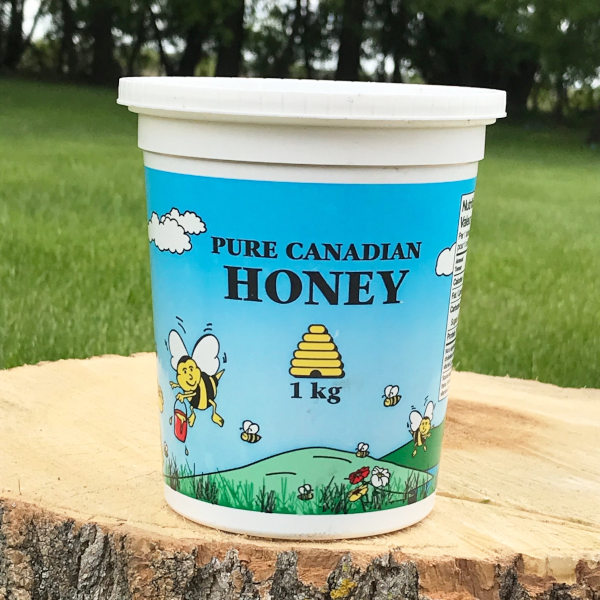
Each region around the world is able to produce its own types of honey, based on the vegetation their bees feed on. Our own range of prairie pasture and forest in Manitoba produces wildflower honey worth mentioning. It is so tasty we’ve had customers report that they ate it straight out of the bucket with a spoon! I may or may not be guilty of this as well…
Wildflower Honey
Small batch honey extraction allows us to observe the variations of the honey between the hives. Colour may be slightly lighter or darker, some honey may harden or crystalize differently. This depends on what flowers the bees are feeding on.
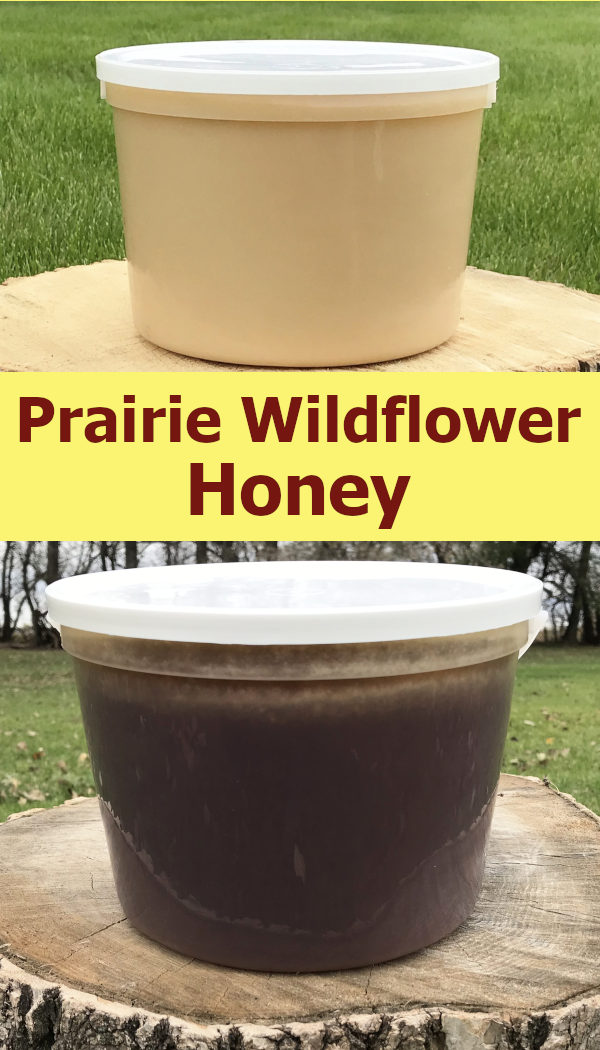
In spring, the first wildflowers the bees find are actually tree flowers – those from willow, poplar and maple. When you think of maple, your train of thought might make you think of maple syrup, and indeed, we describe spring wildflower honey as having a maple and brown sugar flavouring. Grab that spoon! Sometimes this honey eventually forms large crystals, which can be melted back down (please not in the microwave, rather a water bath), but it doesn’t get super firm – it stays spreadable. Nectar that bees collect has to cure in the hive, so spring honey is collected usually at the end of June.
I have to mention a honey I have only had once. A friend of ours put his bees on lilac flowers one spring. Settlers planted hedges of lilacs that are still around today. That’s another story. But it’s no wonder they did, with the heady fragrance that beats out lavender, in my opinion, even if they only bloom two weeks of the year. This lilac honey was quite light and mild, but had a lovely finish, like good wine.
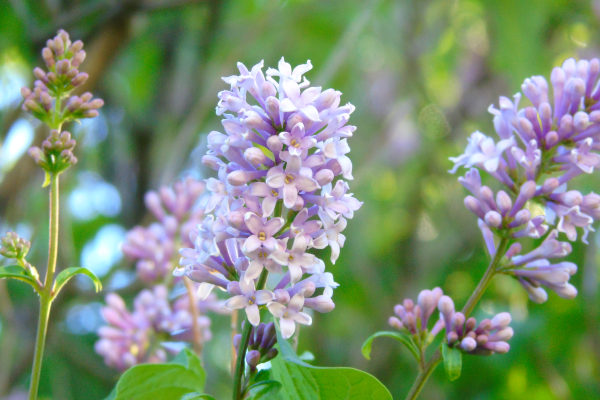
This same friend moved a few years later to a yard site that was basically in a field. He soon realized he would have to supplement feed for his bees, as there were no early flowers for his bees to start on after winter. This will be true for many apiarists on the prairies, where most vegetation has been turned into field crops. Honey will be produced from field crops, and bees must be supplemented in the shoulder seasons. The local bee cooperative actually prefers canola honey because it produces a LOT of honey, for a uniform product. The canola honey must be extracted before fall because the way it crystalizes prevents bees from feeding on it through the winter. But, it goes hand in hand – farmers farm fields, and apiarists farm bees to feed the world.
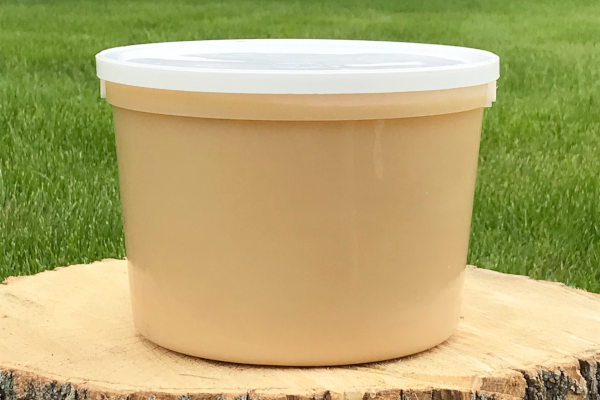
Sometimes our neighbours plant canola, and we extract canola honey. It is light coloured, and can become hard, which is why commercial canola honey is creamed. I tried this once, on the advice of my grandma, and burnt out my hand mixer. Good-bye, mixer. It is also very sweet. For instance, in my honey-dill sauce, I use twice as much wildflower honey as I would canola honey.
If, in an odd year, our neighbours do not plant canola, we get a lovely clover honey during the summer months. It is light coloured and mild, not as sweet as canola, and very smooth! The texture is amazing! It does not crystalize, but stays soft and creamy.
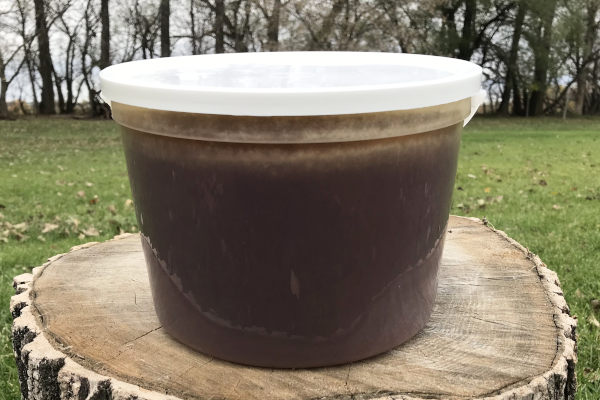
In August, the canola is basically finished, and the golden rod and asters rule the pasture and drainage ditches. We can extract wildflower honey one more time at the end of the month. This honey is something else! It is extremely dark. It is comparable to spring wildflower honey in texture and flavour, but with a hit of molasses. Grab a big spoon this time and hide the bucket from the kids!
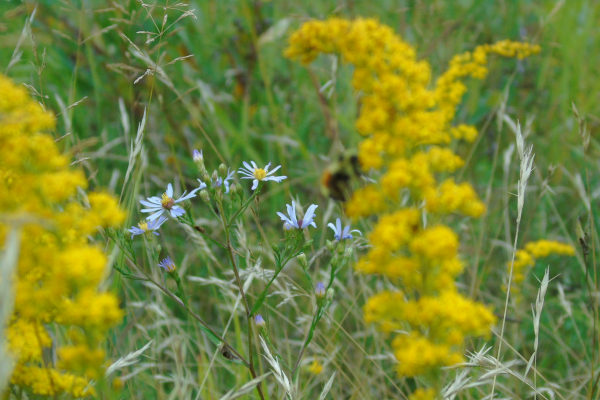
If you ever get the chance, try out the local wildflower honey from your area and find your favourite! Let me know what you discover.
 I'm Erika, I live on eighty acres in the northern prairies of southern Manitoba with my husband and four kids. Here, we enjoy the outdoors and try to be more self sufficient as we try new things in the garden and learn about our land and the world around us.
Hi! I loved learning about the different types of honey. I can feel your heart for this topic. Thank you for sharing.
Thanks, Jenny:)