Do you need privacy? Do you have dry or well-draining soil? Do you need a beautiful green view in the dead of winter, but value the winter sun? These drought tolerant, cold tolerant evergreen shrubs are just what you have been looking for!

I needed some privacy from the road in winter, when the deciduous lilac hedge turns bare. The house is ridiculously close to the road, for a country property, so towering evergreens were out of the question, as they would be too close to the house. I also wanted to take advantage of passive solar gain by collecting winter sun, and not shading the south face of the house in the frigid season.
Drought and Cold Tolerant Evergreen Shrubs
I would prefer to use native shrub species, but in this case, we do not have native evergreen shrubs of an appropriate height. The only native evergreen shrub we have in the Manitoba prairies is the common juniper, which tops out at two feet. This shrub is also a host to apple and saskatoon rust, so I’ve been hesitant to plant junipers, in order to protect the precious fruit trees.
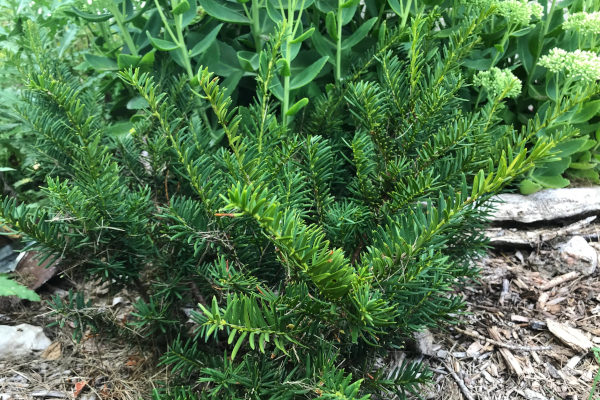
Morden Yew
This first shrub is really just for winter interest against the house. The Morden Yew, Taxus cuspidata “Morden”, is a workhorse, growing to about four feet by four feet. It tolerates any condition – wet or dry (as long as there is drainage), full sun or full shade, pruned heavily or not at all. It is rabbit and deer resistant and cold tolerant to zone 3. Who wouldn’t want one of these?
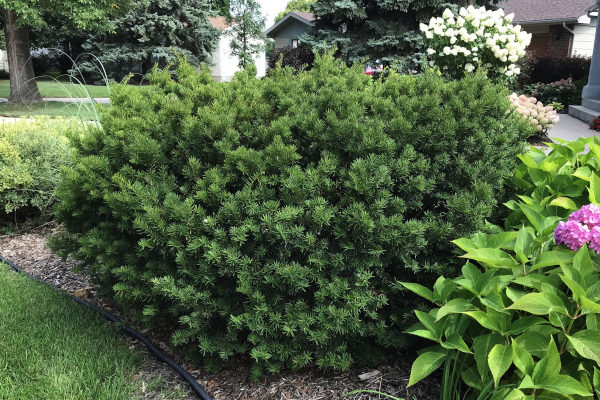
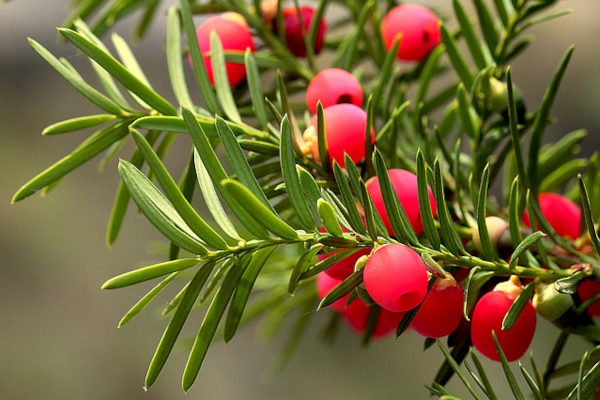
As with all plants, the Morden Yew must be watered until it is established. It grows pretty little red, poison berries that should be kept from inquisitive paws and fingers. It does benefit from snow cover or shade in winter, or risks winter sunburn. All in all, my drought tolerant, cold tolerant evergreen yew has survived where I have killed many another plant.
Mugo Pine
Mugo Pines, Pinus mugo mughus, are wonderfully huge shrubs, up to fifteen feet wide and ten feet tall, just about tall enough to reach the eaves of a one story house. Perfect for privacy, and still getting that winter sun, if they are not sitting directly against the house.
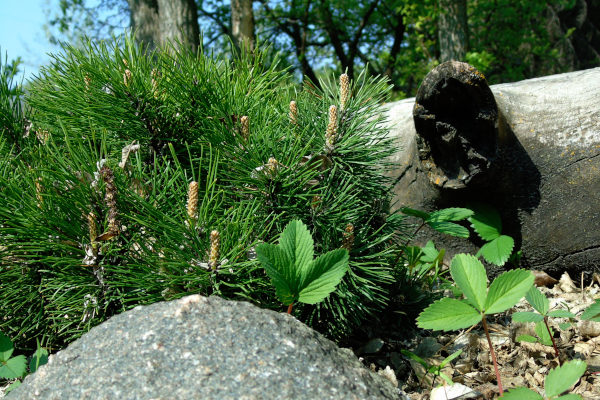
Mugo pines are drought tolerant after becoming established for five years. They can even tolerate partial shade, and are hardy to zone 2! They can tolerate pruning of the new stems, called candles, in spring. I met a lady who pruned her mugo pines so heavily that they stayed two feet tall, though they were at least ten feet wide! It made a dramatic entrance to her home.
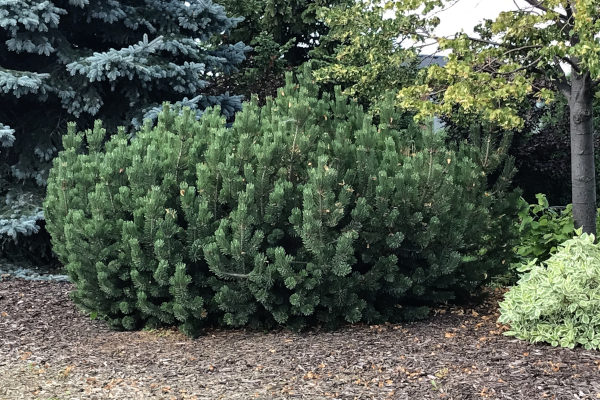
Mugo pines benefit from snow cover or burlap cover the first two years, but are more resistant to winter sunburn than most evergreens after that. They also require good drainage – probably the reason they didn’t survive my mom’s clay soil.
The Mugo also comes in a dwarf variety which grows to about four feet by four feet, and a small upright variety called Sherwood Compact Mugo Treeform Pine which grows up to six feet high by four feet wide. They are both cold hardy.
Juniper
And lastly, my pride and joy, the Medora Juniper, Juniperus scopulorum “Medora”. There are many varieties of junipers and upright junipers to tickle one’s fancy. This one is native to the continent, but not Manitoba. It is a delightful blue-green bush that requires full sun.
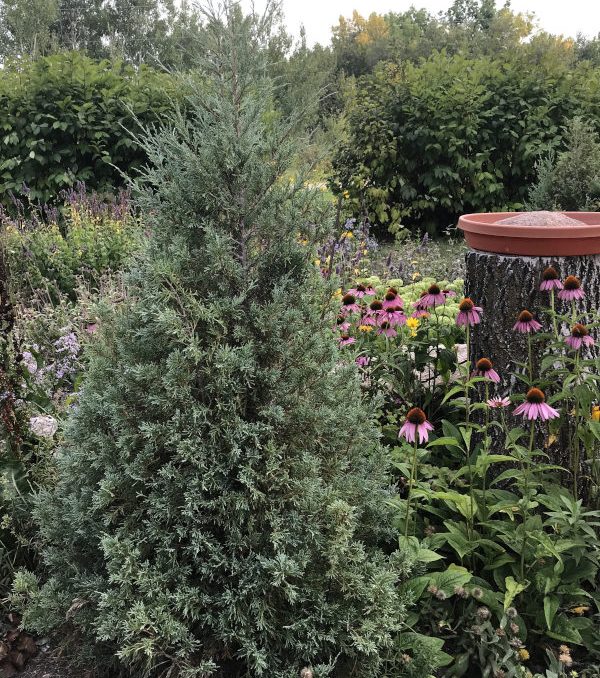
Medora Junipers grow up to twelve feet high, and four feet wide, wide enough to make a difference for privacy. They also, are drought tolerant once established – my shrubs even came packed in sand. These junipers are not sun sensitive, unlike cedars, but mine would have benefited from a burlap shade the first winter.
Medora Junipers do not grow berries, but they are rust resistant, so our apple and saskatoon trees remain safe from that fungi. They are also cold hardy to zone 3. They tolerate some pruning if you like a neatly groomed look, or leave it alone for a natural appearance.
If you are so privileged to live in a slightly warmer climate, perhaps zone 4-9, you really need to get a Tolleson’s Weeping Juniper. This is a shrub made for fairy tales, with its fine textured, blue-green foliage on trailing arms. Alas, it will have to stay in the fairy tale for me – the owner of the local nursery has tried without success to grow this beauty, it bearing too much winter kill.
Local nurseries are a boon to you. They will know what grows best in your area, and what problems you may encounter, specific to your region. For example, this same local nursery does not carry Dwarf Alberta Blue Spruce because they have experienced and received feedback of too much winter kill (complete or partial death due to winter conditions, especially above the snow). However, I have seen this shrub at Costco.
As you have gathered, evergreen shrubs are slow to establish, and they continue to be notoriously slow to grow. For this reason, it may be worth buying larger specimens, so you can enjoy their effects sooner.
I look forward to the day when my drought and cold tolerant evergreen shrubs will be large enough for me to sit in their shade and breathe in their evergreen essence.
 I'm Erika, I live on eighty acres in the northern prairies of southern Manitoba with my husband and four kids. Here, we enjoy the outdoors and try to be more self sufficient as we try new things in the garden and learn about our land and the world around us.
Love these ideas! Great for shade, habitat, and even culinary uses – evergreens are wonderful plants.