There is a reason carrots are so popular in the garden – cold hardy, pest and disease resistant, and easy to grow once germinated. But the only reason you really need to grow carrots is the sweet, earthy taste of a garden carrot that you just can’t get from the supermarket.
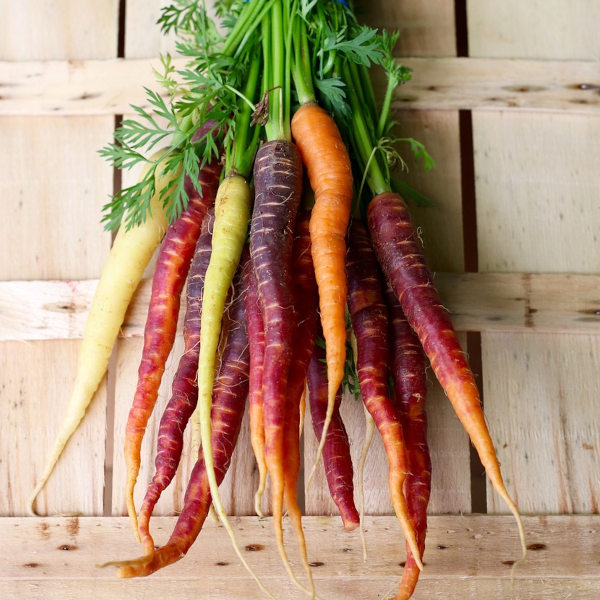
I often like to try new things in the garden, but staples like carrots reliably keep the pantry and freezer full, unless someone tills under your seed row… This year I grew forty pounds of carrots from twenty square feet. But have you ever tried saving seeds from carrots? Or did you know that carrots originally were NOT orange, but rather purple, black, and white?
Growing Carrots
5000 years ago people in Afghanistan were growing these colourful carrots. People in Egypt joined them a few years later. It wasn’t until the seventeenth century that the Dutch cultivated the orange carrot we know today. Trying out a different colour of carrot might keep your interest in this “oldy but goody” vegetable.
Sowing
Sow carrot seeds 2-3 weeks before the last frost. From there, germination takes 1-3 weeks. This is the trickiest part of carrot growing – the seeds must be kept moist during this time, and that top quarter inch where those delicate seeds lay can dry out quickly. They may have to be watered almost everyday if it doesn’t rain. On the other hand, torrential rains or zealous waterers can wash seeds out of place, where they would be tilled under in my garden… Making or buying seed tape may help this problem.
Once those little plants start coming up, all that watering paying off, it’s time to start pulling them out. That’s right. Take courage, gardeners – if you don’t thin those seedlings, they will not be able to grow properly. They will grow until they touch their neighbours, and then twist together and become deformed and stunted. Who wants to wash and chop that? Just do it.
Don’t forget to weed early on. Like most vegetables, carrots don’t like to compete with weeds. Once the carrots grow taller, they can shade out the weeds or outgrow them, especially if planted in a patch, or wide row (several rows close together).
Then, let the eating begin! Harvest when the carrots reach your preferred size. Of course, as a frugal gardener, I let them grow as long as possible. Or maybe it’s because all the other plants in the garden require earlier attention that the carrots are neglected till the last possible moment, like during the first big snowstorm of the season. The carrots will keep well in the ground until they are frozen solid (after which they will be limp).
Storing
There are several ways to store fresh carrots, but because they like high humidity, just above freezing temperatures, like the refrigerator, that is where I keep them. Store carrots, unwashed, in a perforated plastic bag, or one that gets opened by my carrot monster regularly and may or may not always be closed properly.
Clearly, I don’t store forty pounds of carrots in the fridge. They can be sliced, blanched, and frozen, but some people don’t like the rubbery texture that can accompany them. They can be canned with a pressure canner, but some don’t like the mushiness of those either. Pickled carrots are a nice crunchy treat, but how many pickles can one eat?

You know I like the easy way of doing things. So I get out the food processor, scrub the carrots (no peeling necessary), shred them, put in freezer bags, and freeze them. Done. I got 60 cups of shredded carrots from 30 pounds. These I can add to things like soups, casseroles and spaghetti sauce.
Seed Saving
In order to collect carrot seeds, like all plants, you must start with an heirloom variety. Hybrids may not come back true to form. They may look like a different variety from the parent plants, if they seed at all. They may be sterile.
Carrots are biennials, so they only go to seed in their second year of growth. In milder climates, or if you’re lucky, carrots may be left in the garden over winter, and will come back the second year to flower and go to seed.
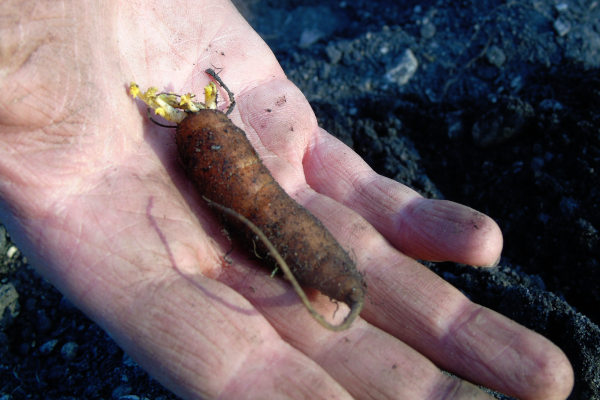
If you live in a colder climate, like my zone three, you will have to store carrots over winter and replant in the spring. Those carrots from my fridge made it all through that dark season – so well, in fact, that when I sent my carrot monster to fetch them from the fridge for planting, he ate a few on the way.

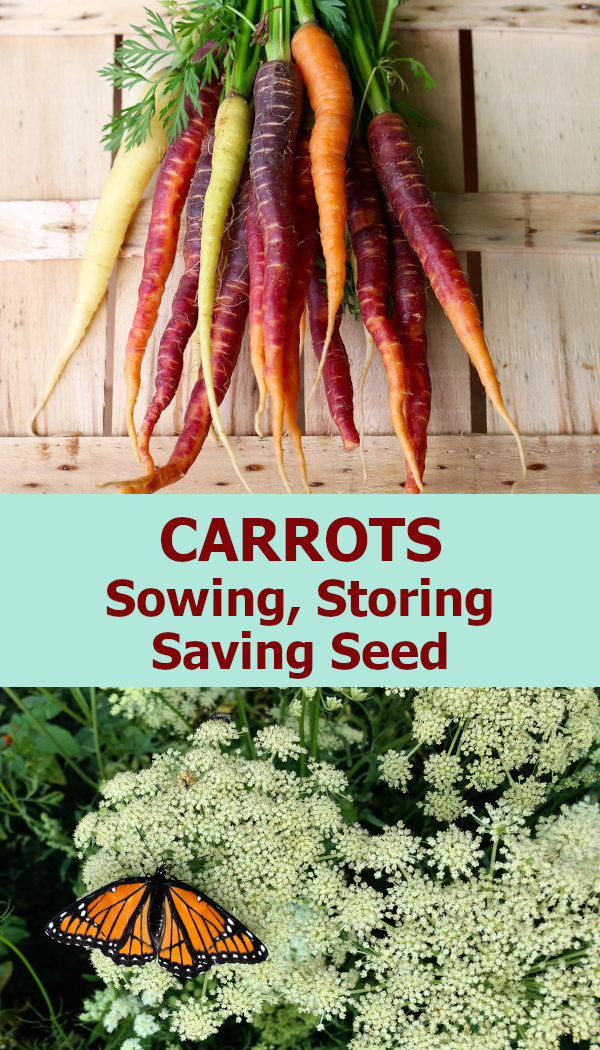
Plant at least half a dozen of just one variety of carrots, unless you want them to cross pollinate. Plant as early as the seeds, several weeks before the last frost, the crown (top) at soil level, 18-24” apart. They will benefit from a full season of growth. The plants can get quite tall, over three feet, with large, beautiful clusters of minuscule white flowers, which are great for pollinators too!
The seeds are mature when they turn brown. Then they can be collected and dried an additional week or two on a tray or in a paper bag. Seeds can be rubbed off the seed heads for more compact storage of up to six years.
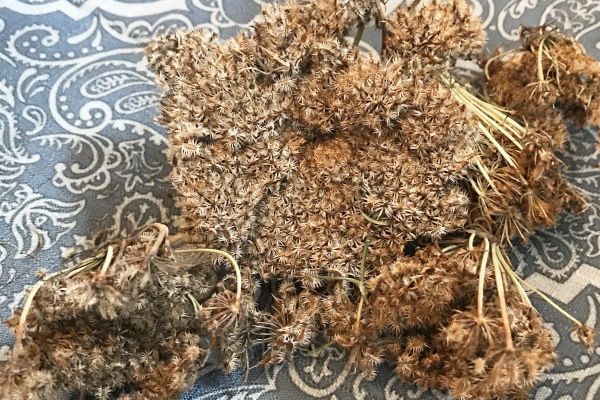
So, why not switch things up with a new variety of carrot, or try growing carrot seeds and carrot flowers. Let me know your favourite type of carrot!
 I'm Erika, I live on eighty acres in the northern prairies of southern Manitoba with my husband and four kids. Here, we enjoy the outdoors and try to be more self sufficient as we try new things in the garden and learn about our land and the world around us.
Leave a Reply