Chokecherries are a rural prairie classic. From chokecherry pie to chokecherry syrup, these tart berries are a late summer treat. Read on to get the low down on harvesting chokecherries and making chokecherry syrup.
Different years produce different yields of berries in general, often depending on if there are late frosts or high winds during blooming season. Sometimes it just seems to depend on a person’s secret picking spot. This year, at my not-so-secret spot, the chokecherries were big, beautiful, and plentiful! I could pick an ice cream pail full in ten minutes. No bumper crop of saskatoons or blueberries can compete with that!
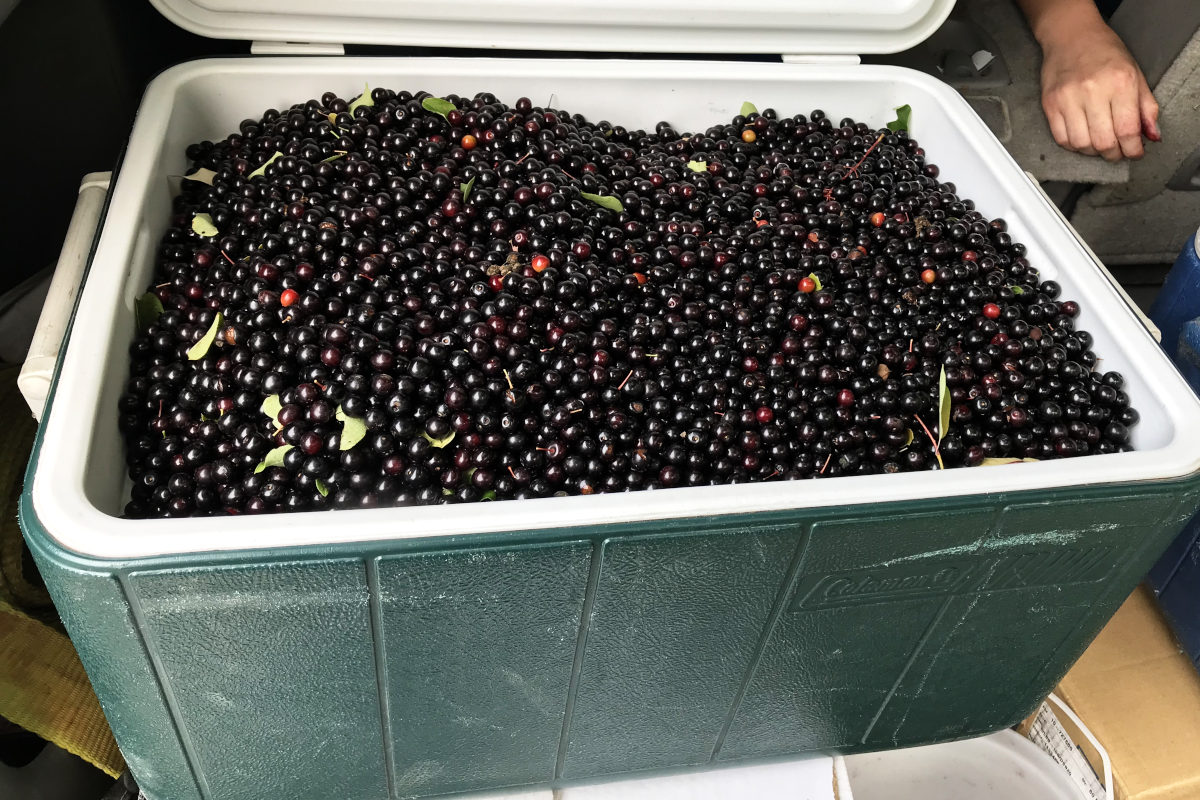
So, if you have five people picking for an hour (even with some squirrel-like picking, dashing to and fro, from certain young hands) you get…a lot. This is our cooler full.
Chokecherry Shrubs
Chokecherries grown in clusters on large, suckering (spreading uncontrollably) bushes. They produce bunches of delicate, white, fragrant flowers in spring, giving way to berries, which start green, turning reddish, and maturing when they are black. They are ready for harvest sometime between mid-August and mid-September, depending on the year.
Picking chokecherries is a joy – it feels efficient when you can pick so much so quickly, a handful at a time. Watch for bears, but don’t worry about stealing their supper, there is plenty to go around.
Chokeberry Shrub
This year I was introduced to Aronia, a plant commonly called chokeberry. It is a shrub that produces 1cm berries that taste extremely similar to chokecherries, without the pit!
It produces berries on its own but benefits from a pollinator – a different type of chokeberry, for optimal fruit production. For instance, the “Viking” chokeberry might be pollinated by “Ground Hug” chokeberry.
Aronia is less invasive than chokecherry, and is immune to black knot – the fungus found on many wild chokecherry bushes. Its fall colour rivals Amur Maple and Winged Burning Bush, but it is cold hardier than either of them.
To top it off, it grows at a fast rate of 10-14” (25-35cm) per year, and is native to parts of North America. “Viking” Aronia grows to 6’x6’, whereas “Ground Hug” is a groundcover reaching 14”x3’.
If I could get a few of these bushes to produce, they could greatly reduce the preparation time of chokecherry syrup! I’m all for time saving hacks!
Preparing Chokecherry Berries
Then the (not so much) fun part begins. Chokecherries must be washed, picking out leaves, twigs and bad berries. I used to spend hours picking stuff out.
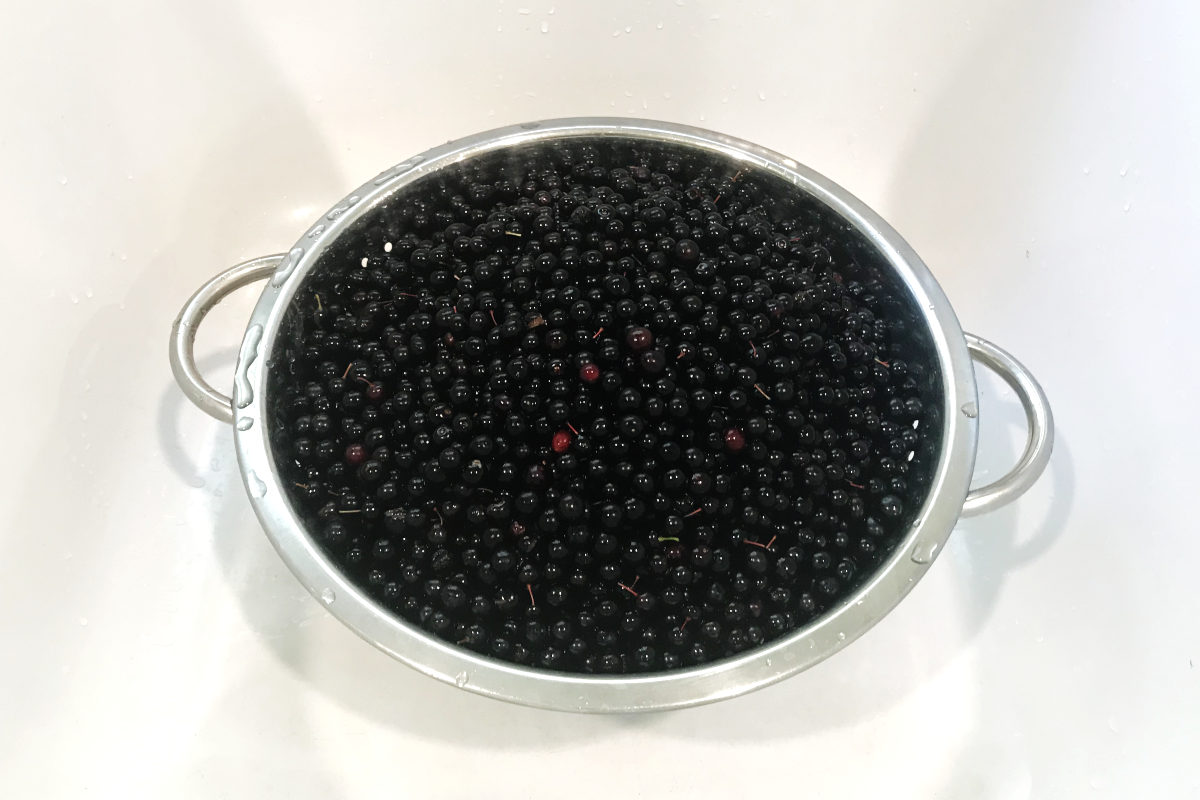
Thankfully, I found a method that greatly speeds up the process: Fill a bowl or container about a third full of berries. Then fill the bowl half to two thirds with water. Swirl around. The leaves, twigs, and even many of the sub-par berries will float to the top. They can simply be poured off the top. Repeat two or three times until clean. Use a colander to drain completely. Done!
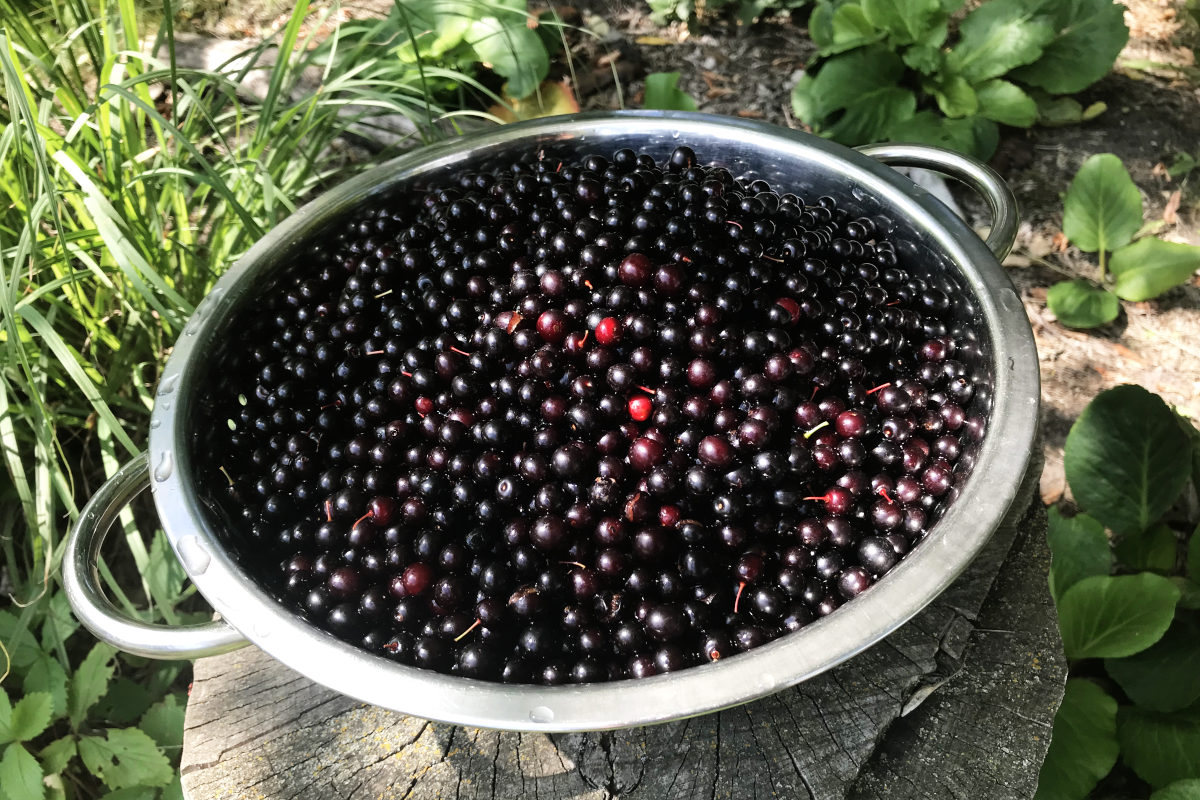
What to do with these gallons of chokecherries? My grandma likes to make chokecherry pie (bake in a pie shell with a bit of flour and a lot of sugar). That saves time on the front end in preparation, but leaves every bite with a mouth full of pits to spit out on the back end. That seems about as bad as eating fish with bones. First step, give a few cups of chokecherries to grandma and leave the pie to her.
The husband took a few pounds to start some homemade chokecherry wine. So far it smells amazing. Chokecherry wine is common among DIY prairie vintners.
Chokecherry Syrup
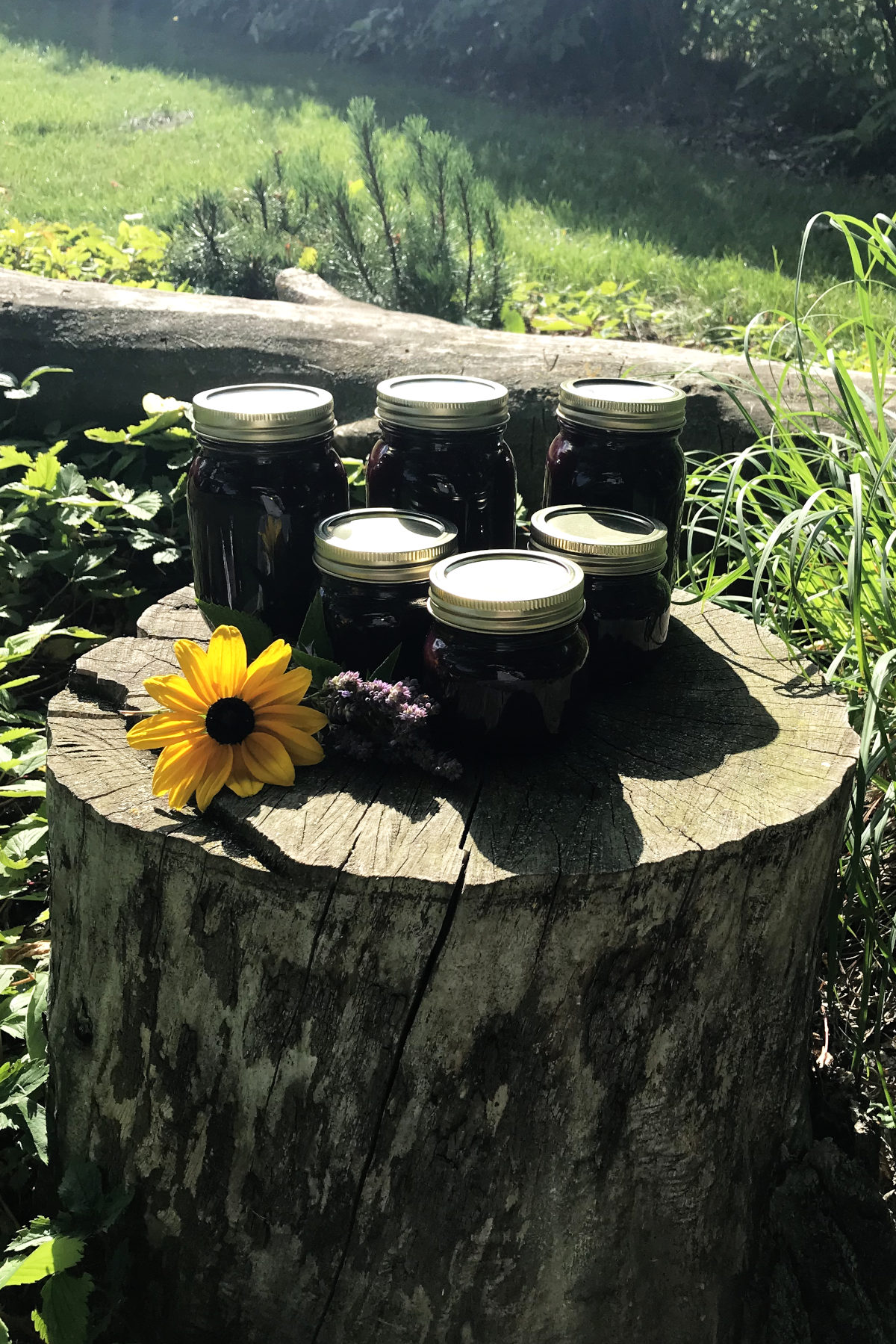
My favourite summer staple of all time is chokecherry syrup. This recipe is modified from Mennonite Girls Can Cook. You can imagine I made a bit more than the four and a half cups of syrup. Maybe I won’t have to forage for chokecherries next year…
First step in making chokecherry syrup: Place whatever amount of chokecherries in a pot. Just barely cover berries with water. Bring to a boil and simmer until berries are soft.
With water still in the pot, mash the chokecherries. A potato masher works perfectly.
Strain the juice and pulp from the seeds and skins. One day I might have the privilege of using a food mill and confirm that this wonderful invention works magnificently for separating pits and skins from pulp.
In the meantime, I use my grandma’s cone shaped colander and wooden pestle. In a pinch, get creative with a regular colander. Now that I know how to clean chokecherries, this is the part that takes some time. Oh food mill, where are you? Oh chokeberry bush, you are calling my name.
Pits and skins can be tossed in the compost. I have not had any chokecherries sprouting in my garden!
Measure your juice. Pour back into the pot. Add one cup less sugar than juice. I used half sugar, half honey.
Bring to a boil and boil for 15 minutes, stirring occasionally. There’s nothing like trying to clean burnt-on pot bottoms – every time I can something.
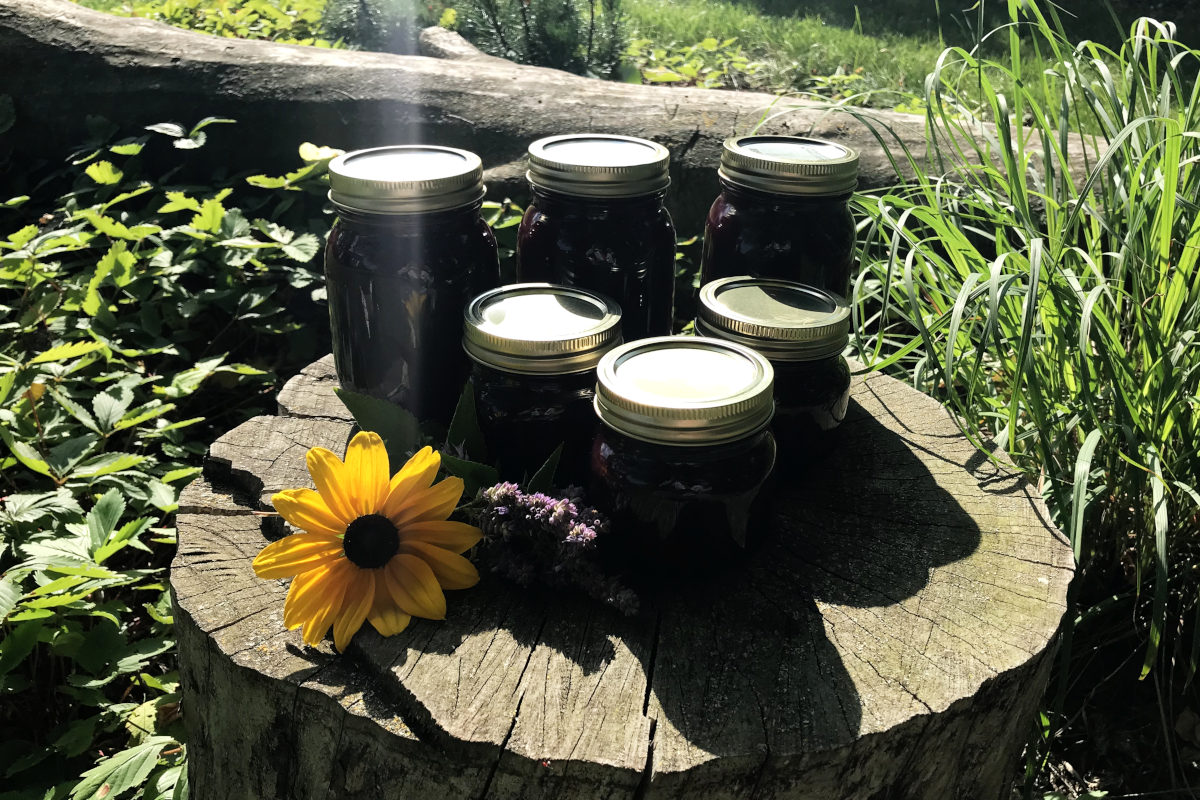
Pour into sterilized jars or pretty bottles. Store in the fridge for several weeks or can.
Water bath the filled canning jars for 10 minutes (0-1000ft elevation) for long term storage.
I put my extra syrup (because you know I ran out of jars, and at some point canning is just done) in containers in the freezer. But beware – make sure they are in secure containers and can’t tip over, because the syrup doesn’t freeze completely, even in the depths of my deep freeze.
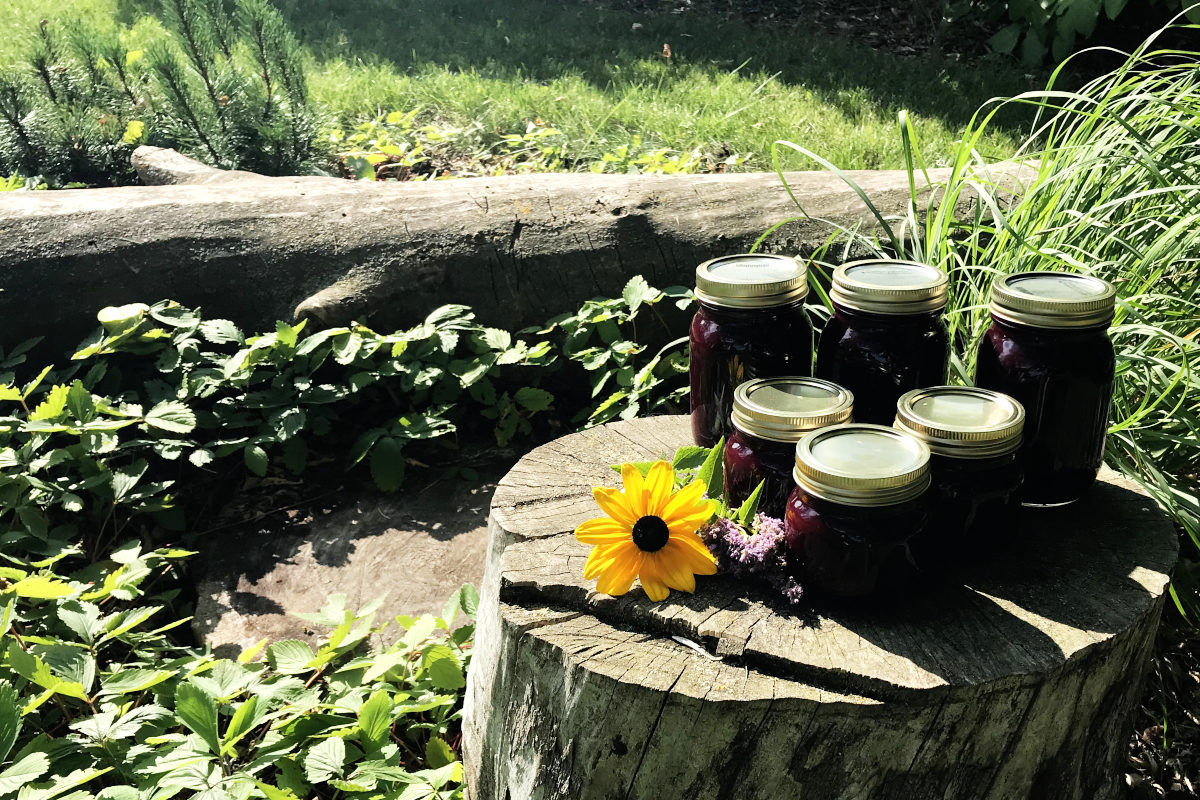
Classically, pour chokecherry syrup over pancakes. But who can wait just for pancakes?? Make punch, or dilute for juice or flavoured water. Use it to flavour soda stream, sparkling water or club soda. Use as a dip or spread for biscuits (scones, bannock, schnetke) or toast. Ice cream topper. Hmm, I am imagining chokecherry syrup over New York cheesecake! Lick the spoon!
As we wait for next chokecherry season, let me know your favourite way to use chokecherries and chokecherry syrup! I think I need to make a trip to the pantry…
You might also like these stories:
Platz: Fruit Dessert Square Bar

Chokecherry Syrup
Ingredients
Method
- Put cleaned chokecherries in a large pot. Just cover the berries with water. Bring to a boil and simmer until the berries are soft, 20-30 minutes.
- With the water still in the pot, mash the chokecherries. A potato masher works perfectly.
- Strain chokecherries in a cone shaped colander, food mill, or regular colander.
- Measure the juice, and pour back into the pot. Add one cup less sugar or honey than juice. Boil for 15 minutes, stirring occasionally.
- Pour into clean or sterilized jars or pretty bottles. Store in the fridge for several weeks, or freeze or can. Water bath canning jars for 10 minutes (0-1000ft).
- Enjoy at every opportunity!

 I'm Erika, I live on eighty acres in the northern prairies of southern Manitoba with my husband and four kids. Here, we enjoy the outdoors and try to be more self sufficient as we try new things in the garden and learn about our land and the world around us.
Leave a Reply