Have you been wanting to plant a native tree in your yard? Have you had trouble finding one to buy? There may be logical reasons why they are hard to find, and why choosing an introduced tree species might be a better option.

You know I like preserving old things, displaying my grandparents’ heirlooms, and parts of old farm equipment left over from when our property was a working farm. I’ve set up my native prairie flower bed, and planted a nannyberry shrub, and some local native trees. But recently, our local garden club hosted Dr. Wilbert Ronald, who talked about the benefits of introduced species of trees.
Reasons for Introduced Tree Species vs Native Trees
Dr. Ronald, owner of Jeffries Nurseries in Manitoba, Canada, has spent his long career propagating and hybridizing trees and plants. He has a great passion for this. His work was featured in the film, “Gardening from the Heart”, and he received the prestigious Stevenson Award in 2002 for his contributions to horticulture in Manitoba.
Diversity
Ronald has more than passion – he has several reasons why introduced species are a benefit. The first is really an umbrella for the rest – DIVERSITY. The dangers of monoculture, expanses of only one species, are becoming apparent as we see them, one by one, decimated by disease. But more on that later.
For us Northerners, and perhaps for you if you live in grassland prairies, desert, or high altitude, the variety of native tree species to choose from is somewhat limited. Here in Manitoba, a fairly large piece of land at almost 650,000 square km (250,000 square miles), we have 24 species of native trees – eight coniferous and sixteen deciduous, six which are rare or uncommon (“Trees of Manitoba Field Guide” by the government of Manitoba).
In our area we also only have one evergreen shrub, which grows to a blistering height of two feet. Check out my choices for evergreen shrubs in this article.
Disease Resistance
Trees are a long term investment. It may take ten years or more for a tree to start having a significant effect on its landscape, such as in shade or beauty. That is why trees are rather expensive – they are several years old by the time they reach the garden centre, and the time put into them is significant. Who would want all that time and investment dying early?
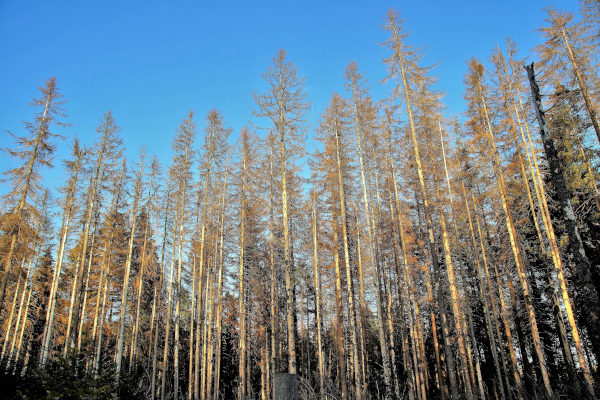
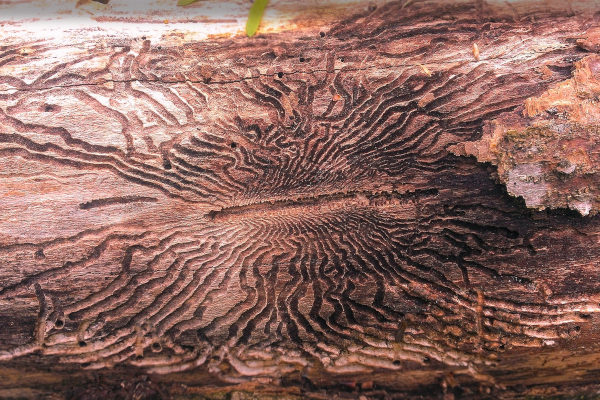
There have been several devastating diseases that have threatened local populations of trees. In Alaska there have been spruce beetles killing vast sections of forest to the tune of 1.6 million acres from 2016 to 2023. There was also an outbreak in the 1990s that lasted for over a decade (forestry.alaska.gov). Here in Manitoba the emerald ash borer appears to be controlled, says Dr. Ronald, but in the northeastern USA it has been a huge problem, killing 99% of ash trees in its path (invasivespeciescentre.ca).
In Eastern Canada the damage to American elms by Dutch Elm Disease has been immense (invasivespeciescentre.ca). Here in Winnipeg long ago, many boulevards were planted with American elm, and they look beautiful with their high canopy arching over the streets. Many trees in the province, however, have already had to be removed due to the fungal infection. Incidentally, the remaining trees then have to carry the entire load of cankerworms that was spread out among all the trees before. This they can’t do. (extension.umn.edu)
Despite these threats, landscapers still like these trees. They have a pleasing form and are hardy to the climate of the region. Boulevard trees, in addition, as Dr. Ronald mentions, require certain characteristics, such as a canopy that doesn’t get damaged or in the way of snow clearing (think hills of snow under the trees), or landscaping or mowing beneath, not to mention cars, houses, and pavement nearby.
In response, plant breeders, over years and decades, develop strains that are resistant to the current disease pressures. For example, Freedom® Japanese Elm Ulmus davidiana ‘Jefree’ and some other Japanese elm tree strains are resistant to Dutch elm disease, and the Mancana Manchurian Ash Fraxinus mandshurica ‘Mancana’ has shown a high level of resistance to the emerald ash borer. So there is hope!
The age of planting monoculture boulevards and shelterbelts around farmyards and homesteads is over. Planting a variety of tree species ensures that the whole planting isn’t destroyed if a single species dies.
Tidiness
Much of landscaping is about adding beauty. Don’t make the ground unbeautiful in the process. Dr. Ronald say to be careful about planting trees that lose fruit or seeds on sidewalks, paths, parking lots or driveways.
There are trees bred for blooms, but don’t form fruit. Courageous® Rosybloom Crabapple and Spring Snow flowering Crabapple are two such trees. Mmmm, I can just imagine the smell of those blooms as I walk up to the house!
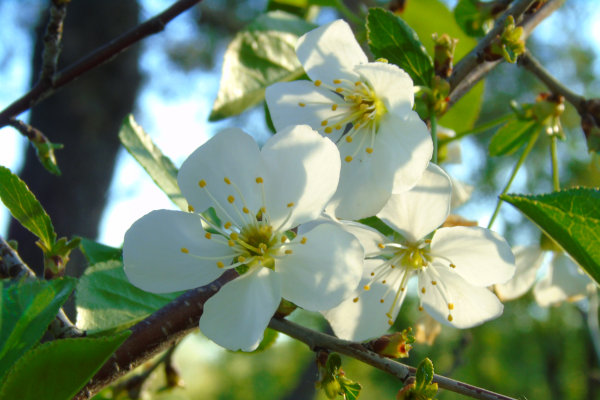
Other fruit trees retain their fruit through the winter. The birds will love you for planting these trees. Starlite® Flowering Crabapple is Dr. Ronald’s choice, and Royal Beauty Rosybloom Crabapple is another.
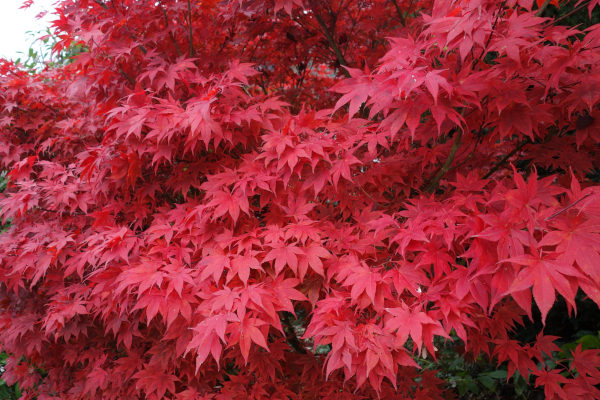
Female Manitoba Maple trees produce a copious amount of seed, of which every single seed germinates. If you don’t believe me, come for a visit. Dr. Ronald had some choice words for this Manitoba native tree. Make life and weeding easier. Be a good neighbour. Plant male trees or a seedless variety, such as the Silver Maple.
Fruit Production and Pollination
Actually, there is only one fruit tree listed in “The Trees of Manitoba Field Guide” – the Wild Plum. My husband found some plums on our property last year – it was an exceptional year for fruit and berries, and I’m the one who got to process them. They made a very tasty, tart jam; excellent with cheese and crackers, but it was incredibly time consuming cutting out the pits. Next time if certain persons (my dear children) want jam, they will have to help!
I will note that we do have other native berry shrubs, but some of these, such as saskatoons, produce better when they are pollinated by another variety of the same species, which would have to be a cultivar (nursery produced variety). We also experienced this on our property last year. Some of the Saskatoon varieties I planted the other year bloomed, and we discovered native Saskatoon shrubs all around the yard that we didn’t know were even there.
Many fruit trees, including apples and pears, need another tree of the same species to pollinate them. So, an apple tree needs another apple tree (of any variety) to pollinate it and produce fruit.
Where would we be without the European native apple tree? Introducing non-native fruit trees is a big step in becoming self-sufficient – for regions and individuals.
Reasons to plant a tree
Of course, there are limitless reasons to plant a tree. They are a shelter against prevailing winds, privacy, and shade from the scorching sun – my parents only got air conditioning in their house after their huge, shady elm tree succumbed to Dutch elm disease. Speaking of which, replacing old trees, even before they die will prevent gaps in your landscaping.
Large trees can produce a massive amount of oxygen compared to the lawn in their shadow. However, Dr. Ronald mentioned, a little sadly, that it would take a lot of trees to replace those lost to forest fires last year. And we already mentioned the food benefits of fruit trees. Not to mention, habitat for birds and squirrels. And on and on…
So, this year I think an apple tree is on my list to plant. What kind of tree are you planting this year?

 I'm Erika, I live on eighty acres in the northern prairies of southern Manitoba with my husband and four kids. Here, we enjoy the outdoors and try to be more self sufficient as we try new things in the garden and learn about our land and the world around us.
Leave a Reply