Here are the details for harvesting willow bark! Get the when, what, where and how of this useful medicinal plant.
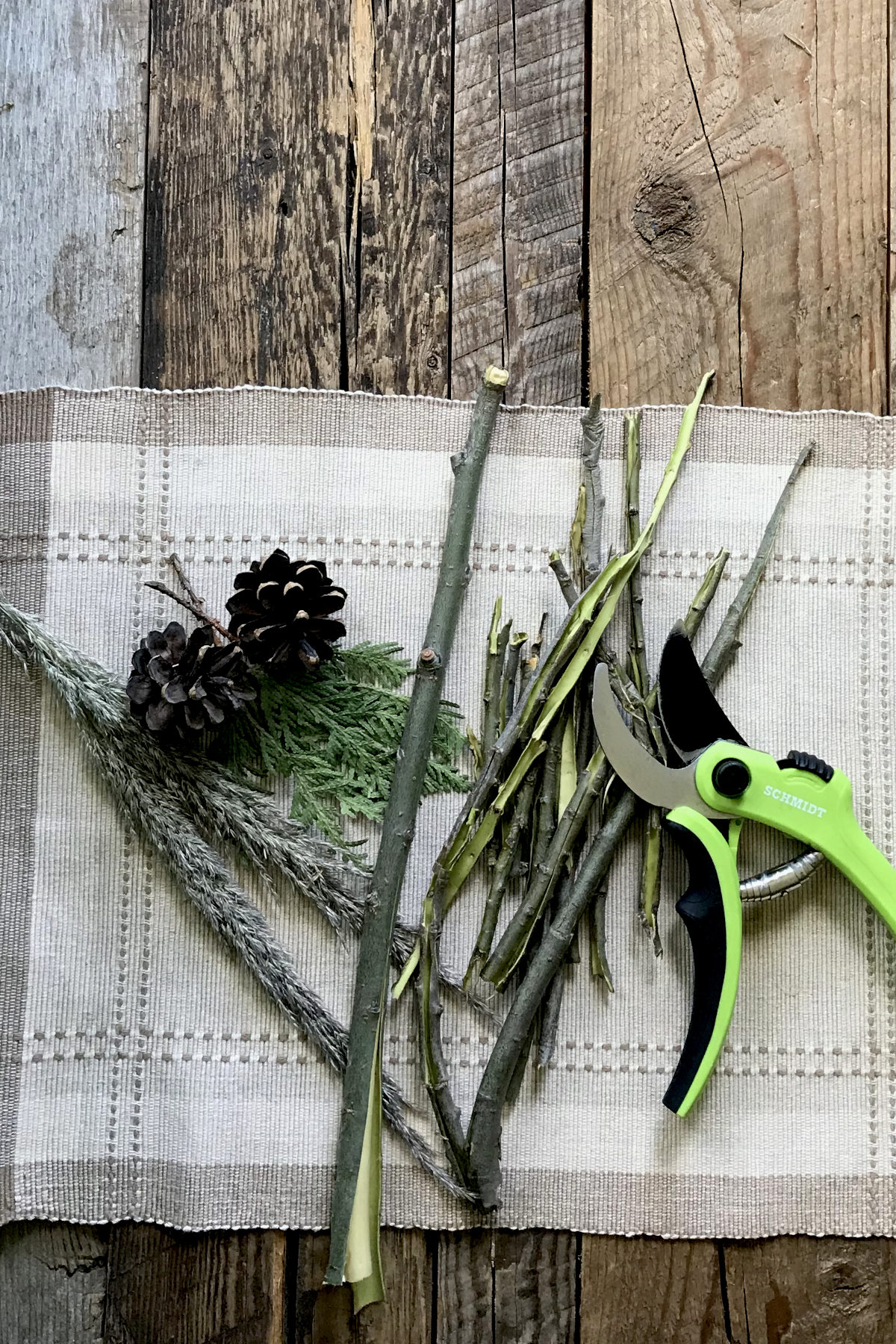
When I was first looking into harvesting willow bark, I was surprised to find the details few and far between, scattered around the web, including a bizarre video of a woman ripping off a strip of bark and chewing it like a wild cave woman. So, I will do my best to collect the useful tips here.
Best Tips for Harvesting Willow Bark
Willow is interesting in the herbal world, because herbalists try to treat root causes of a problem, not just mask symptoms. Pain is a symptom, for which we take willow preparations.
Willow is good for inflammatory responses causing pain. I suppose sometimes we just need to take the inflammation down so the body can relax. It also acts as an antiseptic, analgesic, and antioxidant.
Fun story: the first time I collected willow bark was just before the leaves turned colour in the fall. Let me tell you – that was a pain – and not one my willow tincture could fix. It took forever to peel the bark off the branches, like peeling a dried-up orange. The tincture I made with it was still effective, though.
Then in spring, the kids were rafting and one of them grabbed a willow branch, not quite an inch in diameter, and started shredding the bark with his hands! What an eye opener for me!
Am I allowed to tell this story? My dad was there also, said he learned that lesson the hard way, too, except they were peeling logs for a cabin. I suppose my experience pales in comparison.
White willow tree (Salix alba) is traditionally used for medicinal purposes. It is European and Asian in origin, and to be honest, I’m not sure how common it is elsewhere. Silver willow (Salix alba ‘sericea’) is quite common here in Manitoba and is a close relative. That said, any willow will have a certain amount of medicinal properties, though the amounts may vary.
Willows like water and can be found in low lying areas. There are many, many species ranging from shrubs to massive trees.
I harvested bark from a large willow tree of unknown species. That reminds me, I need to grab some silver willow branches from my parents to stick in the ground (yes, it’s that easy to grow), except the last time I tried that the dogs thought they were great toys.
Spring is best for harvesting willow bark (or peeling logs), or summer while the sap is still flowing well. Choose smaller, young branches, and certainly do not ring completely around the trunk of the tree unless the purpose is to kill it.
Clip or strip the leaves before bringing inside – leave the bugs outside.
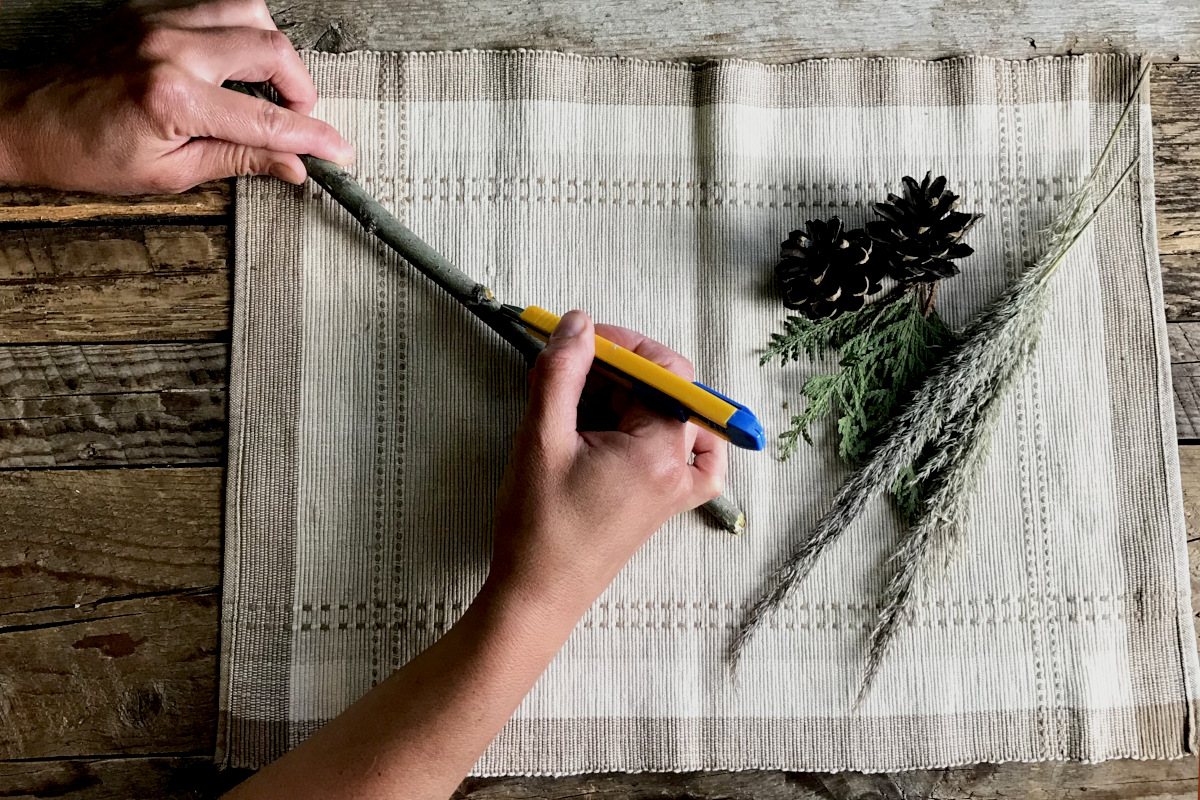
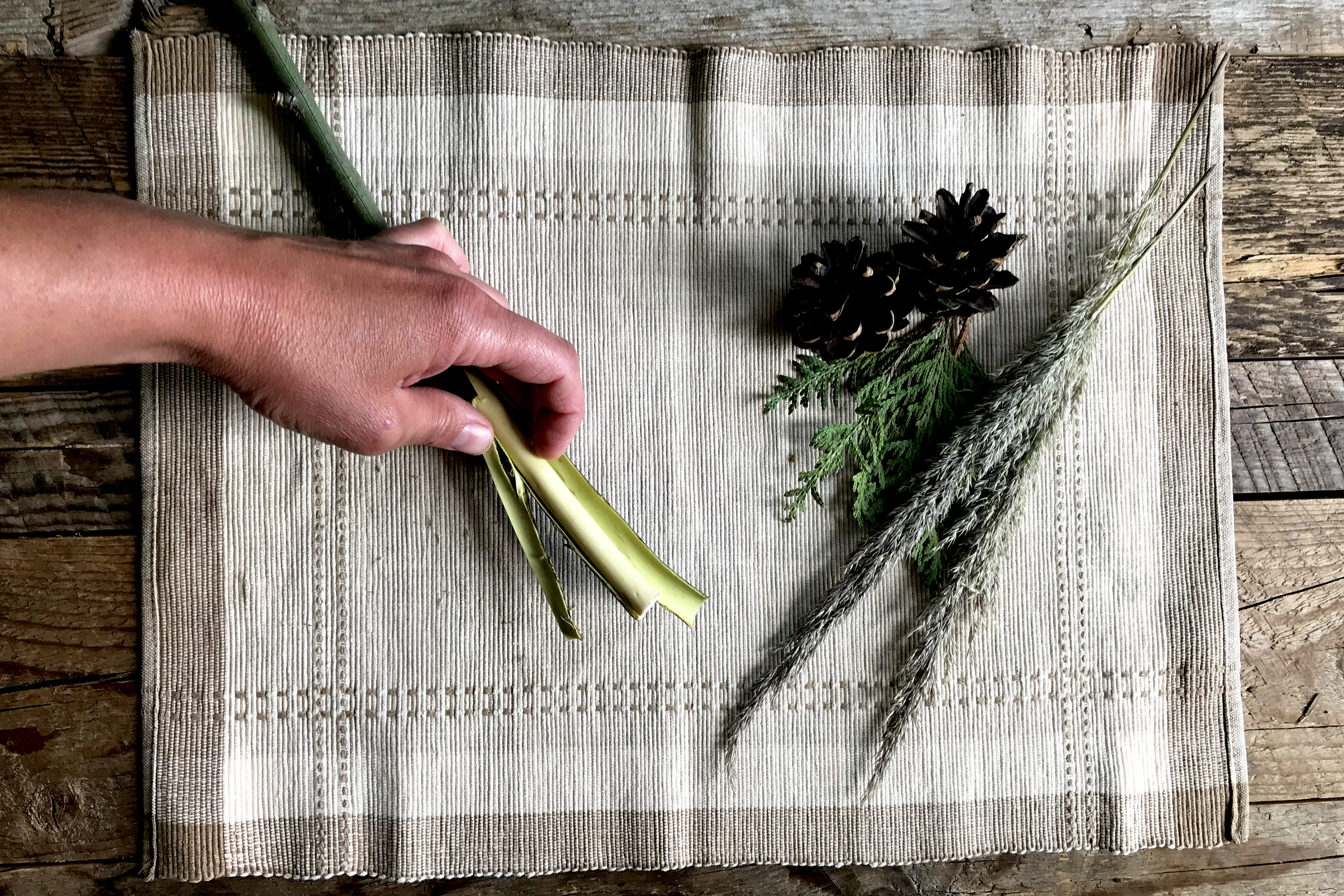
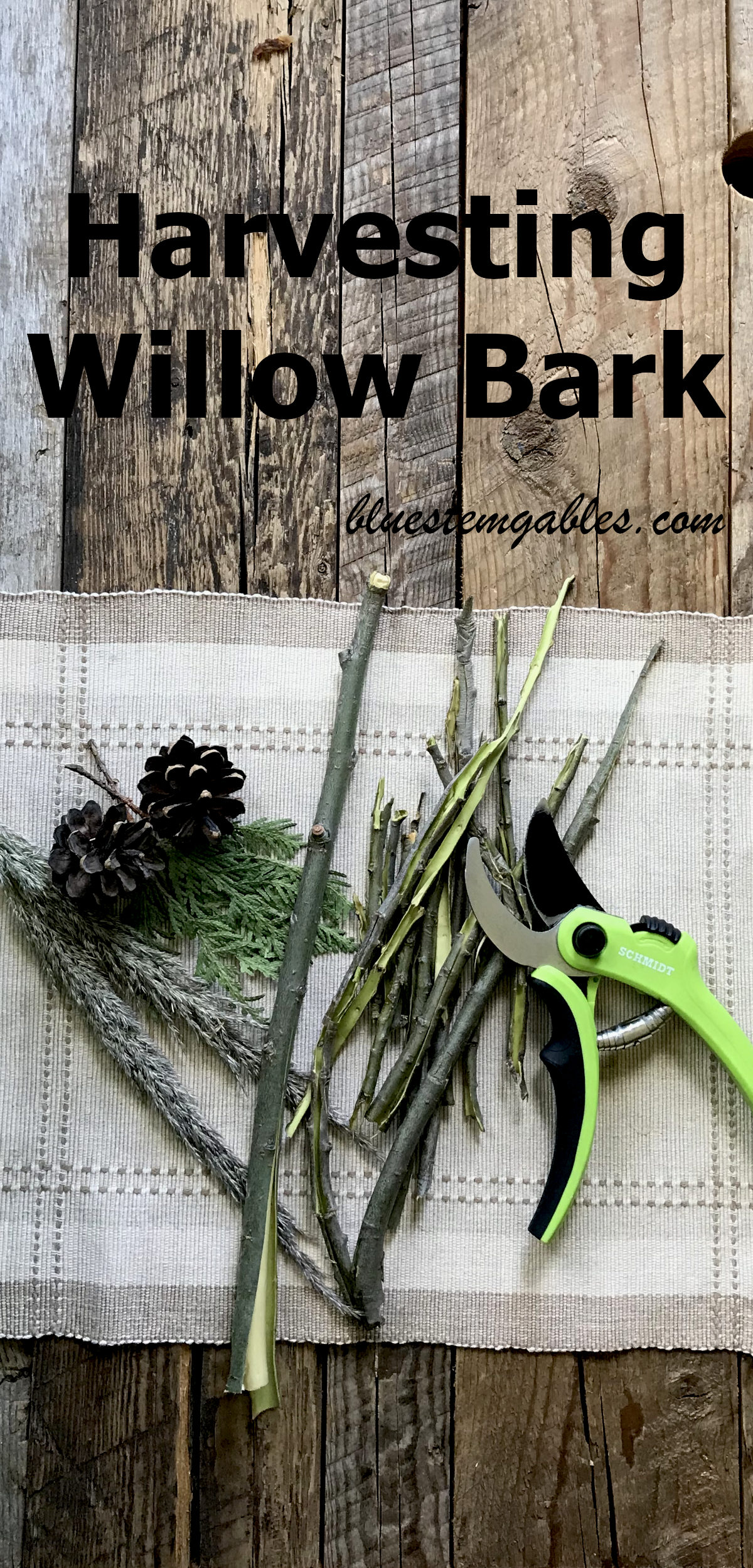
A utility knife works great because you only need the tip of the blade. Slice through the bark down the length of the branch. Then, get your knife or fingernails under the bark and peel it apart. It should be almost as simple as peeling a Mandarin orange – fresh this time.
The light green inner bark is what you are looking for. You can scrape off the outer bark with a knife perpendicular to the bark to increase the absorptive surface area, but I find this too laborious.
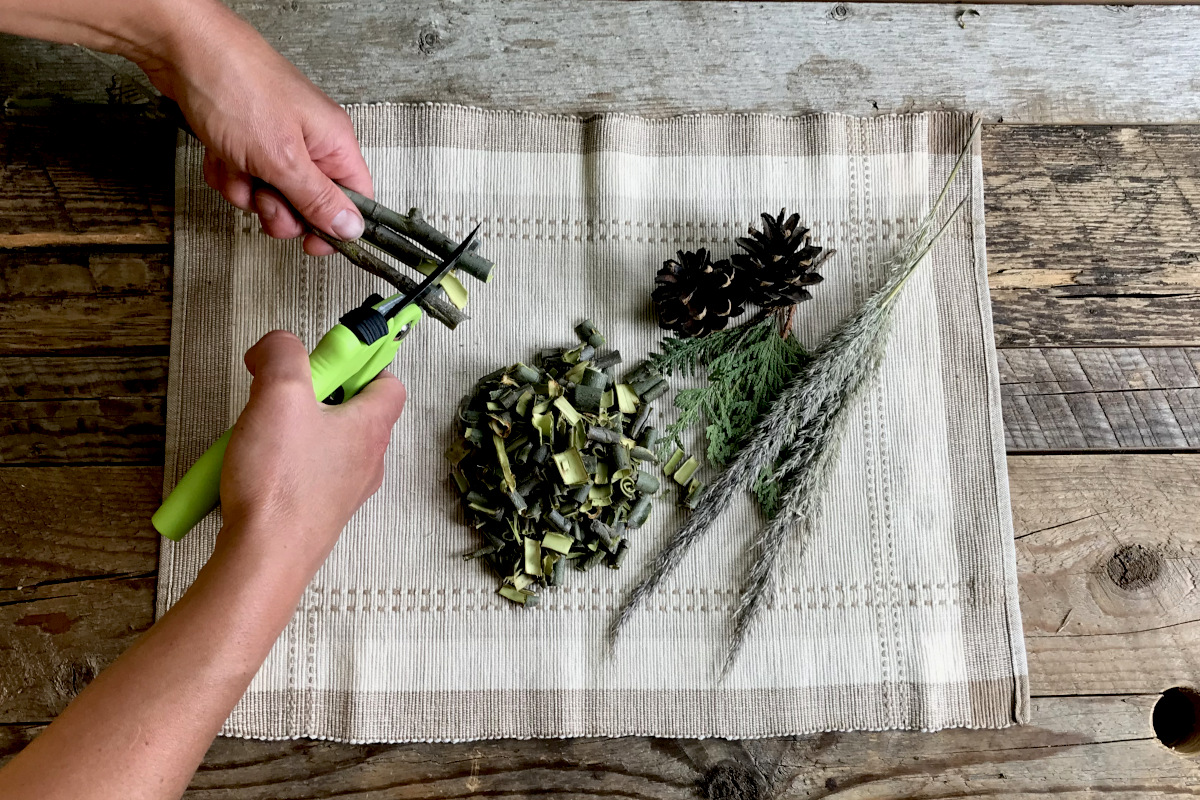
It is better to chop into smaller pieces, for increasing the surface area and packing into jars. Pruning shears are what you want for this. Don’t wreck your scissors and hands. Also, make sure to chop the willow while it is fresh. Much easier.
Do you like my pruning shears? They are from the dollar store. They are not the best, but let me just say I saw a meme that made me feel better, of a pair of pruning shears waving good-bye as the gardener laid them down.
Lay the chopped willow in a single layer in a pan or tray. I like to line it with paper towel for more ventilation underneath. Let it dry for a couple of weeks. Alternatively, use a dehydrator.
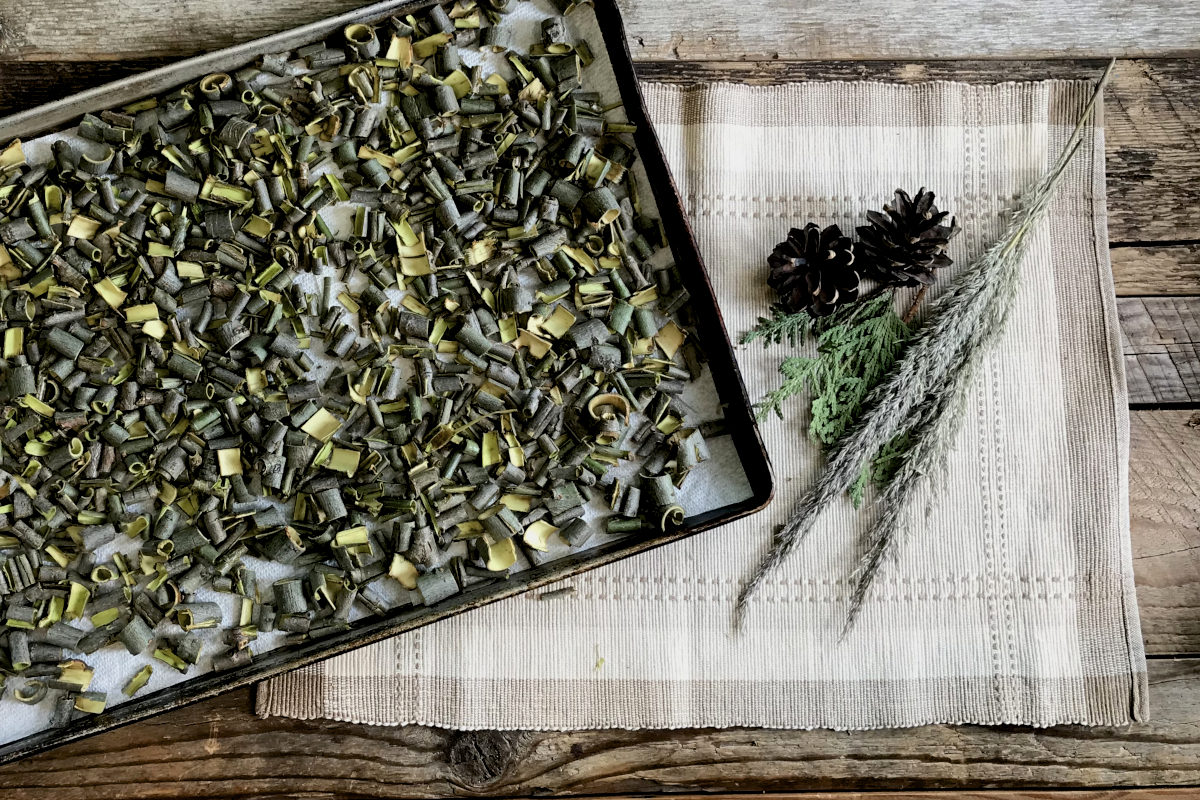
You want willow (or most things) to dry if you are making a tincture so that the moisture doesn’t dilute the alcohol and make it go bad.
I harvested four cups of fresh, chopped willow bark. After drying for two weeks, it measured down to two cups.
Now, I am not an herbalist (or doctor, not diagnosing or treating anything), so I am going to link my favourite herbalist’s article on willow bark tincture and other preparations. There is also a video to go along with it. I am not an affiliate.
There is no weird “woo-woo” on her website, just plant and preparation information, and acknowledging that God has indeed given us these wonderful plants for our benefit, so complex that even now, we don’t understand everything about how they work.
For instance, Heidi says, “Salicin is present in low amounts in willow, and researchers are not really sure why it works as well as it does.”
We do know that, “the synergies of chemicals in the whole plant are much easier for our bodies to absorb and metabolize, and don’t have the dangerous side effects of NSAIDS (non-steroidal anti-inflammatories or over the counter pain relievers) including aspirin.”
Aspirin, on the other hand, “contains a synthetic chemical called acetyl salicylate, which only goes through one metabolic process before entering the blood. For this reason, it can cause stomach upset, ulcers with overuse, and other side effects.”
I am not getting into the technical aspects here, but I must mention some contraindications for taking willow: It has the potential as a blood thinner (not as much as aspirin), so consult your doctor if taking blood thinners. Children with flu symptoms or fever should avoid willow due to the rare potential for Reye’s Syndrome.
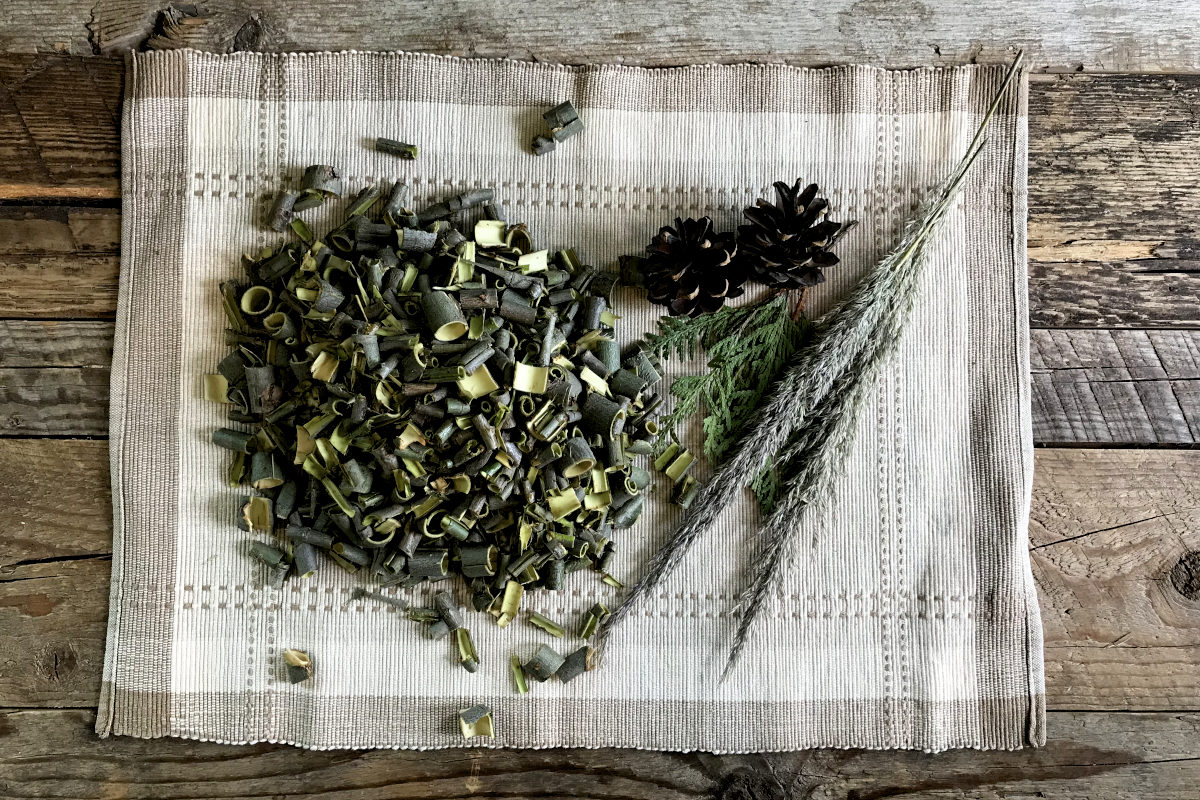
I’ve talked about making a tincture. I’ve also tried making the tea. I assure you, it tastes terrible, even sweetened. Maybe it’s an option it the tincture isn’t ready yet.
I can also assure you that the tincture tastes awful as well. I always remind my kids in regards to the tinctures, “they are medicine, not candy”.
I have experimented and made tinctures with other liquors. Do not bother. It does not help the flavour situation. Just stick with 80 proof (40%) vodka.
There are several people in our household who appreciate and use the willow tincture. It looks like my willow bark is dry and ready for the next batch. Time to go put it together. Have you been out harvesting willow bark lately?
You might like these articles as well:

How to Grow and Dry Milky Oat Tops
Plant a Tree: Native vs. Introduced Trees
 I'm Erika, I live on eighty acres in the northern prairies of southern Manitoba with my husband and four kids. Here, we enjoy the outdoors and try to be more self sufficient as we try new things in the garden and learn about our land and the world around us.
Leave a Reply