Maybe I just like leeks because they reach out of the typical garden fair, like carrots and onions, into the realm of unique. But there are many worthwhile reasons to grow leeks, such as being frost tolerant and largely pest free.

I’ve been growing leeks in the Canadian prairies for several years with good success. Although all grocery prices have sky rocketed, leeks have always been a rich cook’s vegetable. But by growing them in our gardens we can enjoy an expanded palate, and add an entire array of recipes to the box.
How to Grow Leeks
If you start your own leek seeds, they must be started indoors very early, about ten weeks before planting time, the same time as you might start onion seeds. Leeks do require a lengthy growing season, probably the reason they are not a vegetable of my parents and grandparents.
The seeds can be planted in crowded rows or clumps in a grow mix type of dirt. Seedling are typically grown in this medium to prevent rot which can happen in potting soil that holds more moisture. A plastic wrap or cover will help keep in moisture, preventing the soil from drying out, while the leeks germinate.
Leeks should sprout within a week. Keep seedlings moist. Like all seedlings, after two weeks they benefit from regular fertilizer, usually every two weeks, because the grow mix does not contain the nutrients that garden dirt has. A full spectrum grow light is highly beneficial.
Keep leeks trimmed to about four inches or ten centimeters to promote strong stalks, prevent them from falling over, and just getting too tall.
When the soil in the garden is workable, leeks can be planted. The seedlings can tolerate some frost, and the longer they are in the garden, the better.
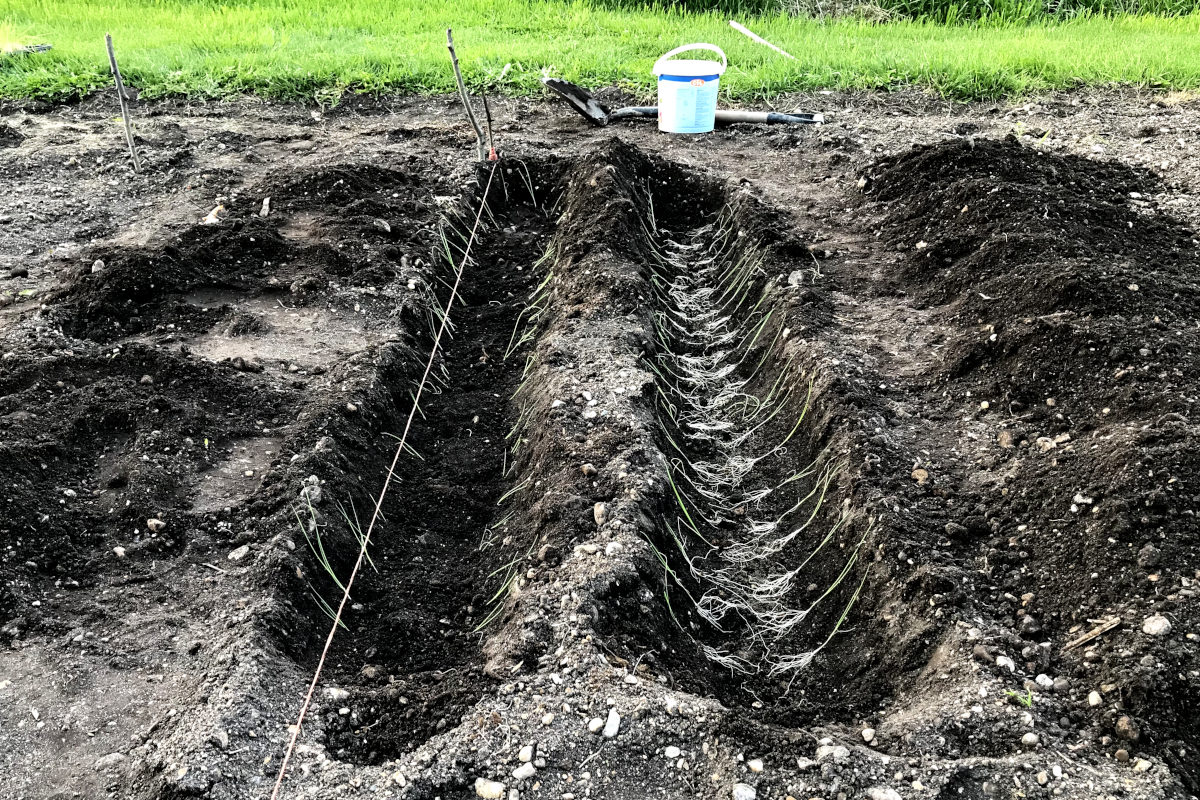
There are lots of fancy ways people have of planting leeks, including using a dubbing stick where you pound a hole for each leek, which seems like a lot of work if you are planting 50-100 leeks, and would compact the soil. I have found that the easiest way is to dig a trench about eight inches or twenty centimeters deep with a full sized shovel, like my spade.
Then gently pull apart the leeks, and line them up on each side of the trench, two to four inches or five to ten centimeters apart. I like to sprinkle just a bit of bone meal in the trench to encourage root growth. Then cover the roots with soil.
As the leeks grow, fill in the trench to keep the bottom of the leeks covered to base of the leaves. This will encourage longer blanched stalks, and a greater edible portion.
Leeks do not need super fertile soil compared to other vegetables. I also try to plant the more odorous plants, like leeks, onion, and herbs among the pest prone plants in an attempt to ward off bugs.
In late fall the leeks will reach their prime. My largest leeks get about one and a half inches in diameter. Of course they are not all the same, and some may only get half an inch wide.
Dig out leeks with a shovel. Like garlic, their roots grab the soil and each other and hang on for dear life. You risk breakage by trying to pull them out.
Lois Hole, long-time Alberta gardening guru, says you can store leeks in boxes, covering the roots in dirt as if they were growing. I have not had much success with this.
I trim the roots and leaves right in the garden and add them to the compost. The leeks can keep in the fridge for a few weeks in a bag or container, after which I must stop procrastinating, and process them.
Rinse the stalks well. Sand and dirt love to find their way into the layers of the leeks. Then I slice the white stalk and light green stem. The dark green stem and leaves get too tough, although some people may dry them. I have not tried this yet… Put the sliced leeks into freezer bags.
People, like some of my kids, who find onions too strong, may prefer leeks. Sometimes I put leeks on pizza, and no one ever picks them off. Sometimes I just substitute leeks for onions in a recipe.
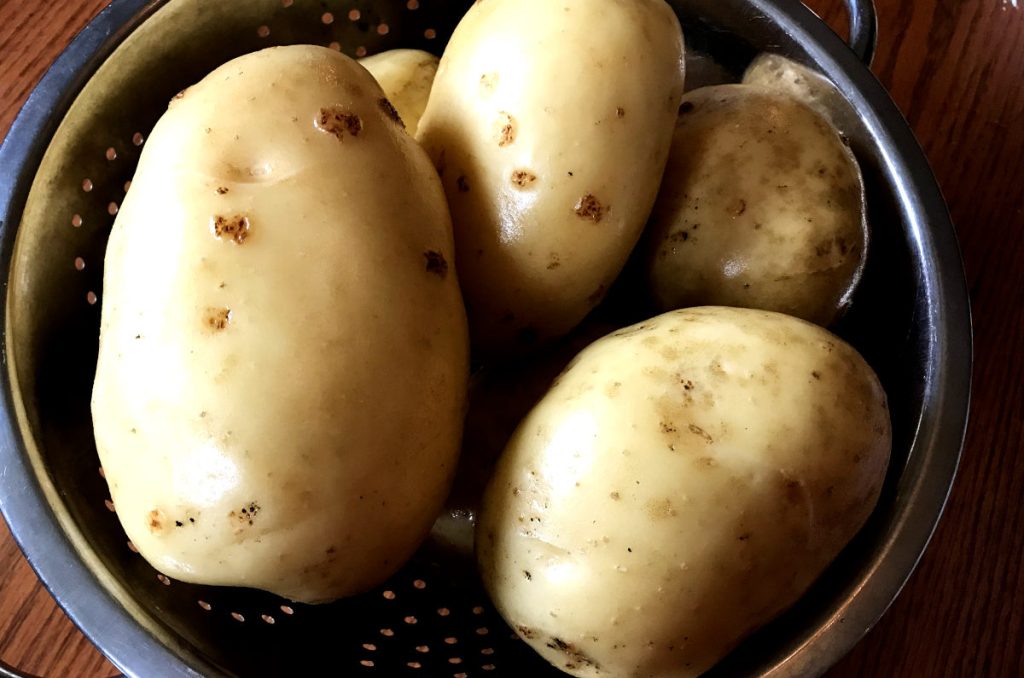
But mainly I get asked to make potato leek soup, best, of course, with garden leeks and potatoes, and broth from a smoked ham hock, with sour dough bread on the side. Sounds like I need to go make some.
So try something new and grow leeks in your garden this summer. Let me know how it goes!
You might also enjoy these gardening articles:
Carrots: Sowing, Storing, Saving Seed
 I'm Erika, I live on eighty acres in the northern prairies of southern Manitoba with my husband and four kids. Here, we enjoy the outdoors and try to be more self sufficient as we try new things in the garden and learn about our land and the world around us.
Leave a Reply