Learn about the whole lifecycle of onions, from planting seeds to collecting seeds! This staple of the garden and kitchen takes on a whole new life as a beautiful allium flower as we explore how to become more self-sufficient by discovering how to collect these biennial seeds and grow onions.

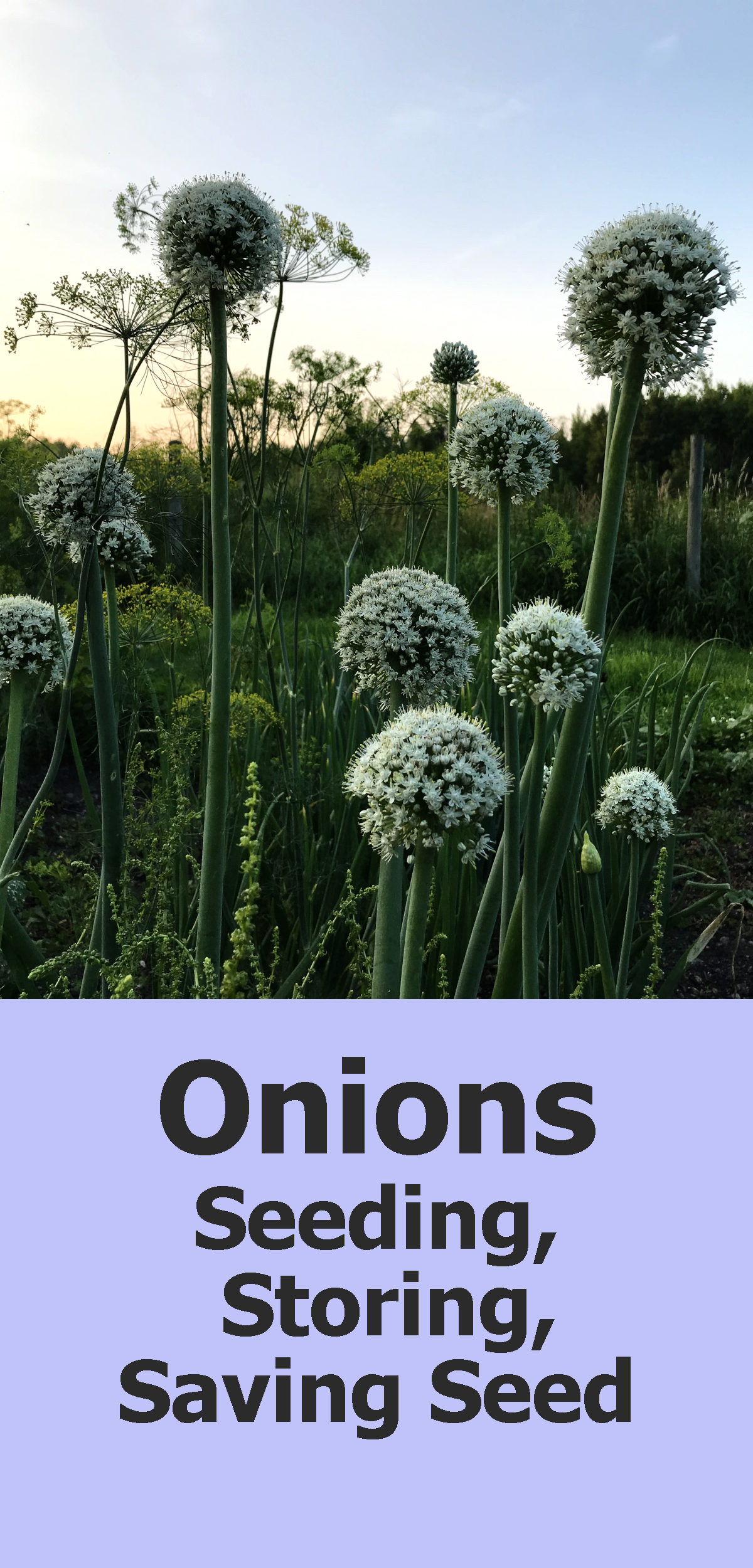
I was super thrilled by the success of my onion seed collecting! In the end, I collected about five thousand seeds from a dozen plants! To top it off, the flowers were gorgeous white globes the size of tennis balls.
Grow Onions from Seed
Do I start with the chicken or the egg? I started with seed from a local heirloom seed vendor. This means I started with seed stock that had already experience harsh prairie winters and blazing hot summers, and the plants will, in essence, be acclimatized to my area, as opposed to starting off in a more temperate zone.
I chose Yellow of Parma onion because it was advertised as “one of the best storage onions available” and of a good size, averaging one pound. It is interesting to note that this onion comes from Italy, dating back to 1896.
When you plan to collect seed, it is important to start with heirloom seeds. These will breed true to their parents, producing plants that look like their parents. Hybridized plants will produce seed which grow into plants in which only about 25% look like the parents.
Onion seeds need to be started early, indoors, ten weeks before planting out. Seeds can be planting fairly thickly in rows or bunches. Just keep in mind that at planting time they will need to be pried apart from their neighbours’ roots. Seedlings require fertilizer every two weeks or so and good lighting.
Seedlings can be kept trimmed to about four inches to keep them neat and under the light, and prevent them from falling over.
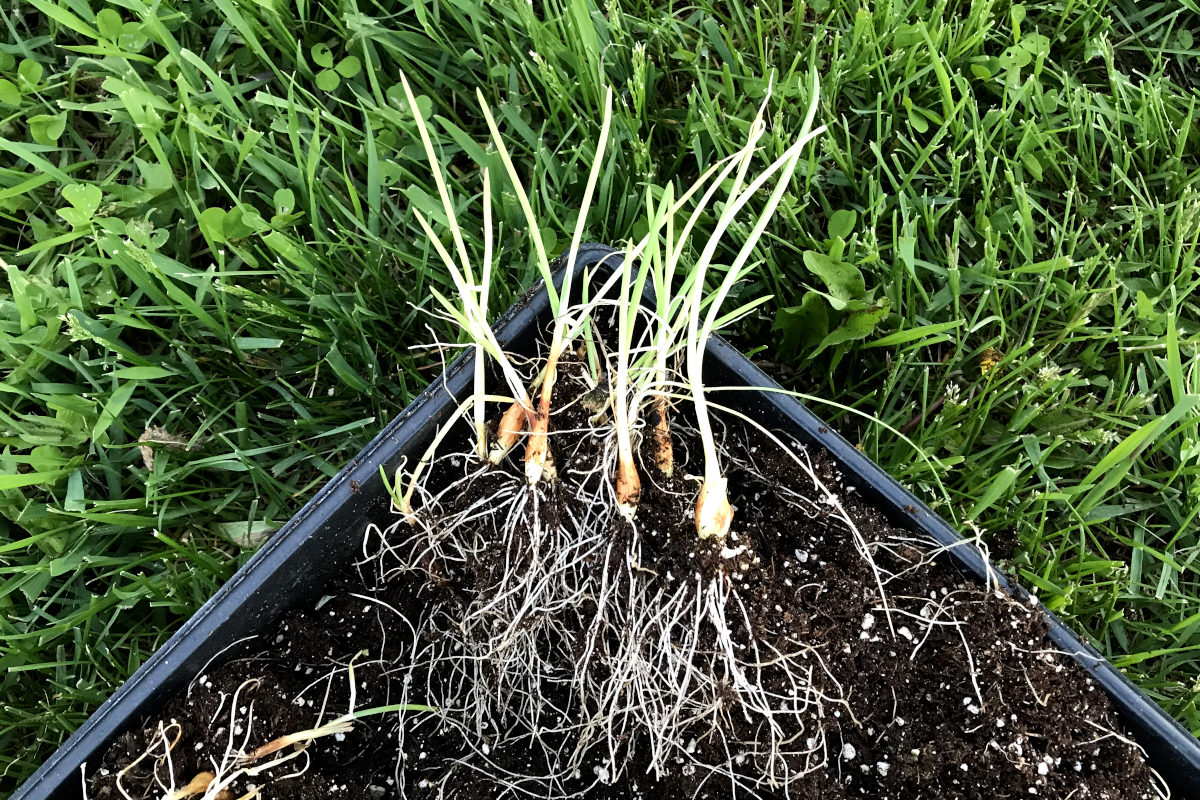
Seedlings can be transplanted out pretty early. They can tolerate a light frost. I like to add a bit of bone meal (phosphorous) to encourage good root growth. Onions like their nutrients. They do not do as well in poor soil as leeks.
Onions can be planted their diameter apart (so they don’t touch when they are full grown), usually 3-4 inches. Like most vegetables, they do not like to compete with weeds. I like to plant in wide rows (three or four rows close together as you would in a raised bed), so that eventually you have a bush of plants that shade the soil, discouraging the weeds, and preventing water evaporation.
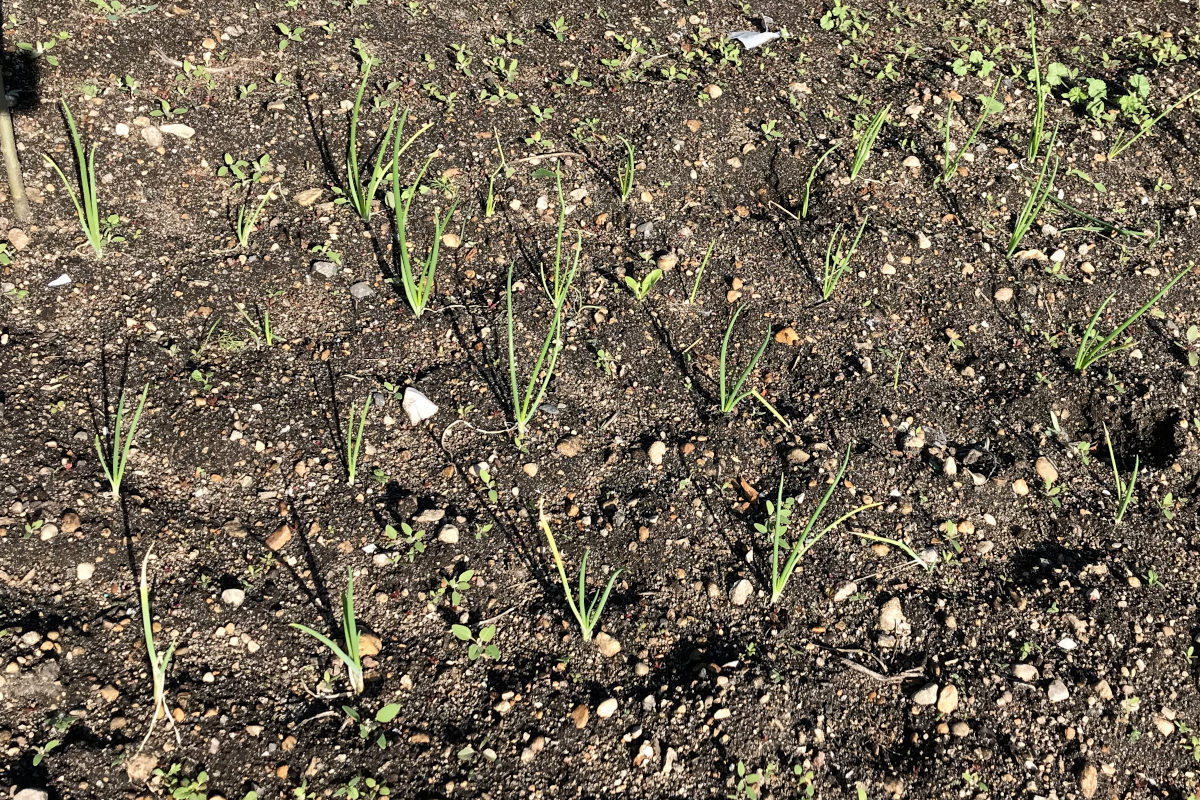
From then on, it’s regular watering, or rain, until harvest. Onions can be harvested for fresh eating as soon as you deem them large enough. I always like to grow them as large as possible!
In order to store onions, they should be kept in the ground until their tops fall over. At that point they can be pulled up and hung to dry out of the rain. I’ve also laid them in cardboard boxes in a single layer.
After about a week or two the outer skin should be dry and papery, the necks thin and dry, and the roots dry. Onions that have necks that haven’t dried should be used first, as they won’t keep as long.
Onions should be kept in a cool spot (think root cellar or a cool basement room) with good ventilation. I’ve used mesh bags and pantyhose, or tied necks together with twine and hung them. I haven’t tried braiding onions yet. One day I’ll have to do that. If onions start to sprout, use them first.
Saving Onion Seeds
In early spring, when the soil can be worked in the garden, here in May, plant at least a dozen good looking onions from the previous year’s harvest. Don’t plant funny looking onions, or you may get funny looking onions next year. (You reap what you sow!)
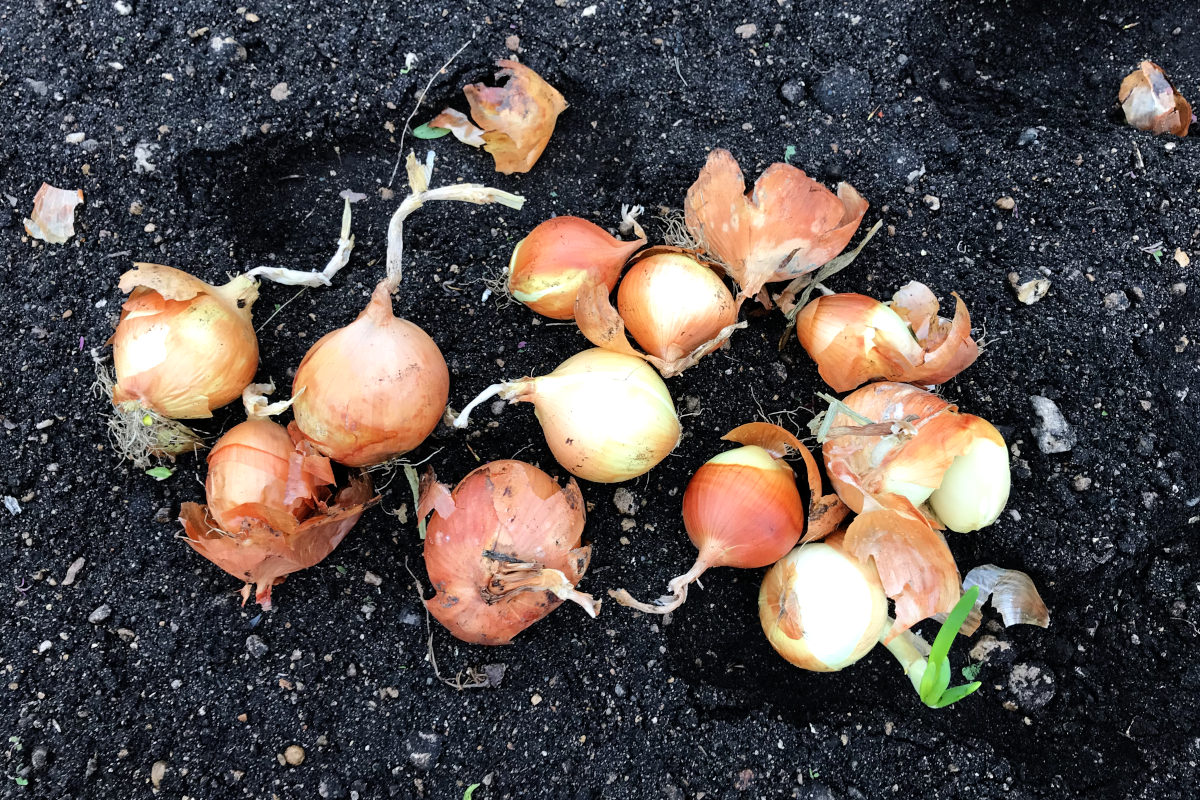
A few of my onions were starting to get a bit soft, others were quite firm still. The firm ones actually took a long time to come out of dormancy, but they all made it. This second year is all about growing the tops of the onions. The bulbs do not grow any bigger. You can see that the tops get downright bushy!
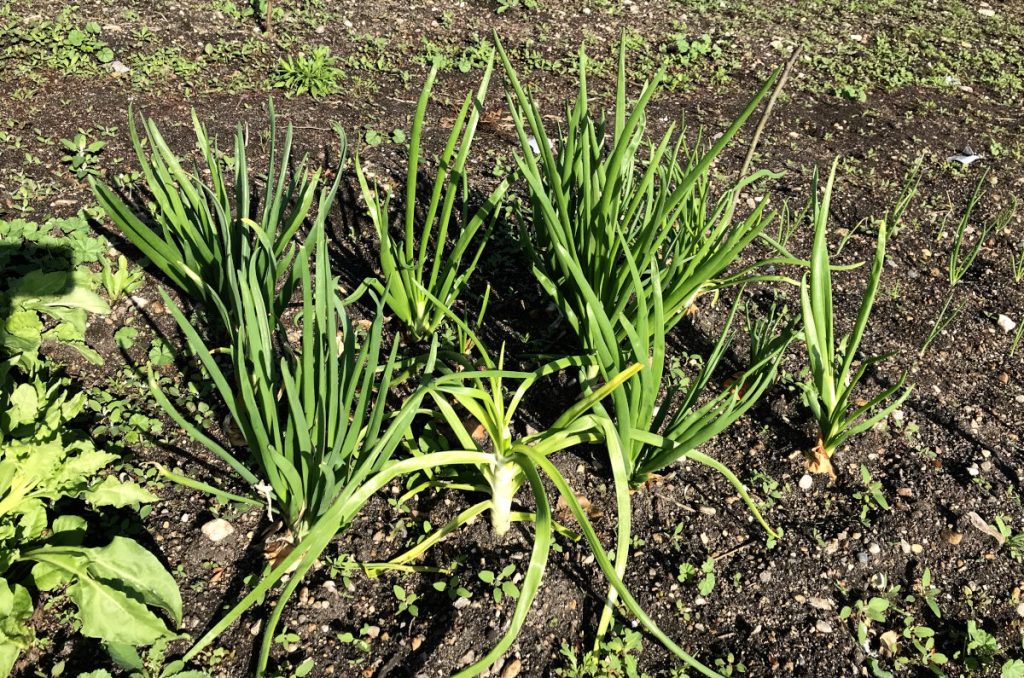
You may have grown allium flowers in your flower bed. Onions are of the same family, and produce beautiful, white globes of tiny star shaped flowers. They would not be out of place in a flower bed! Be aware that stalks can get quite tall. Mine grew about three feet tall.
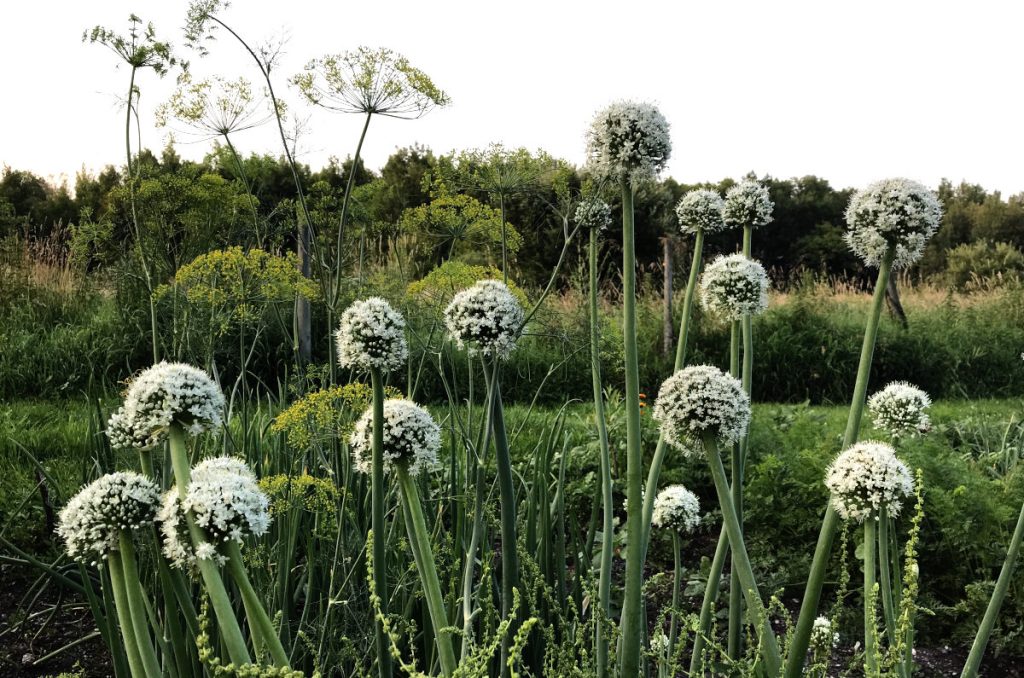
It seems to take forever (just enjoy the blooms!), but eventually the flowers produce black seeds. Pick the flower heads before the seeds fall out, and put them in a paper bag. There they can fully dry for a couple of weeks…or months…
Eventually the seeds need to go into a jar for best storage and longevity of the seeds. Rub the seeds heads between your hands and separate the chaff. Seeds are pyramidal in shape, and hard as pebbles. Seeds that can be crushed between your fingers are no loss.
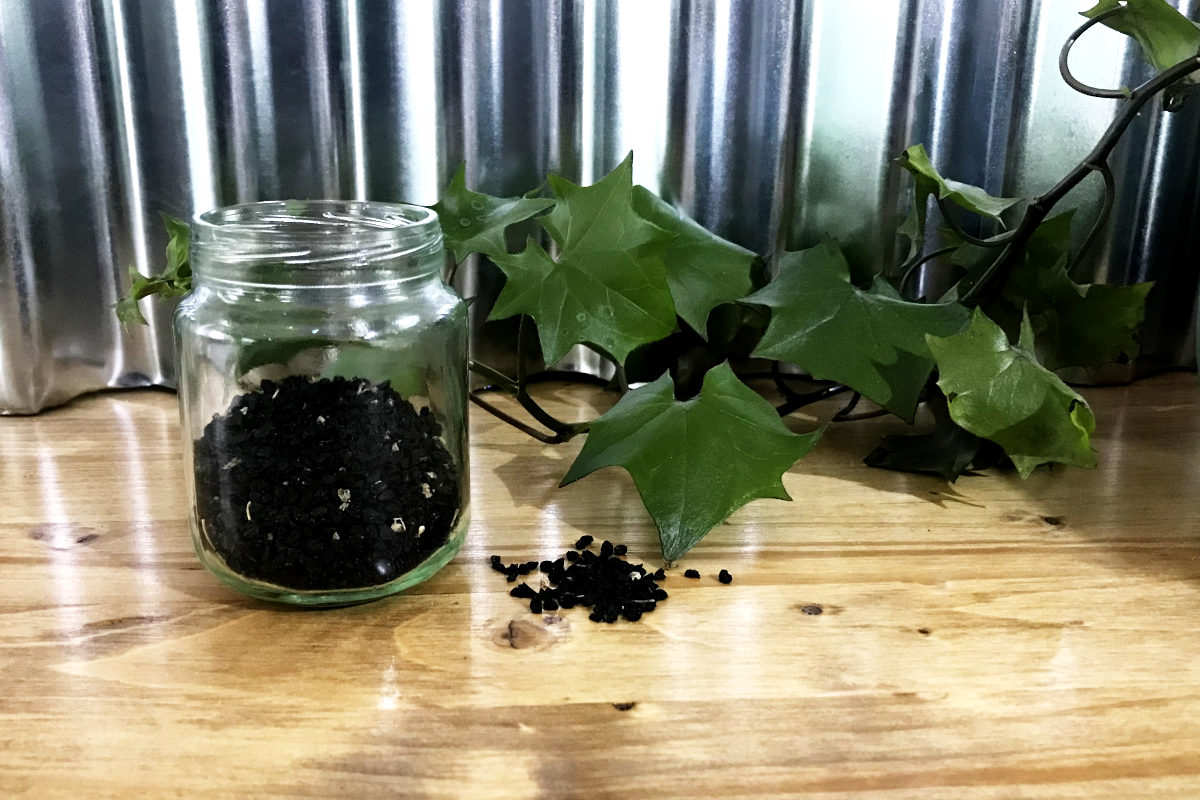
“How to Save You Own Seeds” by Seeds of Diversity Canada claims that onions do not produce many seeds. I must disagree. My mere dozen plants produced over five thousand seeds. (I had to calculate and recalculate to be sure!)
The smart thing to do would have been to immediately run a test plot for germination rates, but I guess we live daringly (or confidently, or by the seat of our pants), and I just planted at the usual time in February. I got over 95% germination rates with my own onion seeds! Fantastic!
Onion Uses
Besides cool storage for fresh use in everything (every time I fry ground meat, or make any casserole or soup), I use onions for canning salsa. This year (because I couldn’t make as much salsa as I anticipated due to a game of tomato dodge ball by certain boys, which they will never live down) I had an excess of onions, so I dried some in my dehydrator. When my fresh onions run out, I plan to use the dried onions in their place.
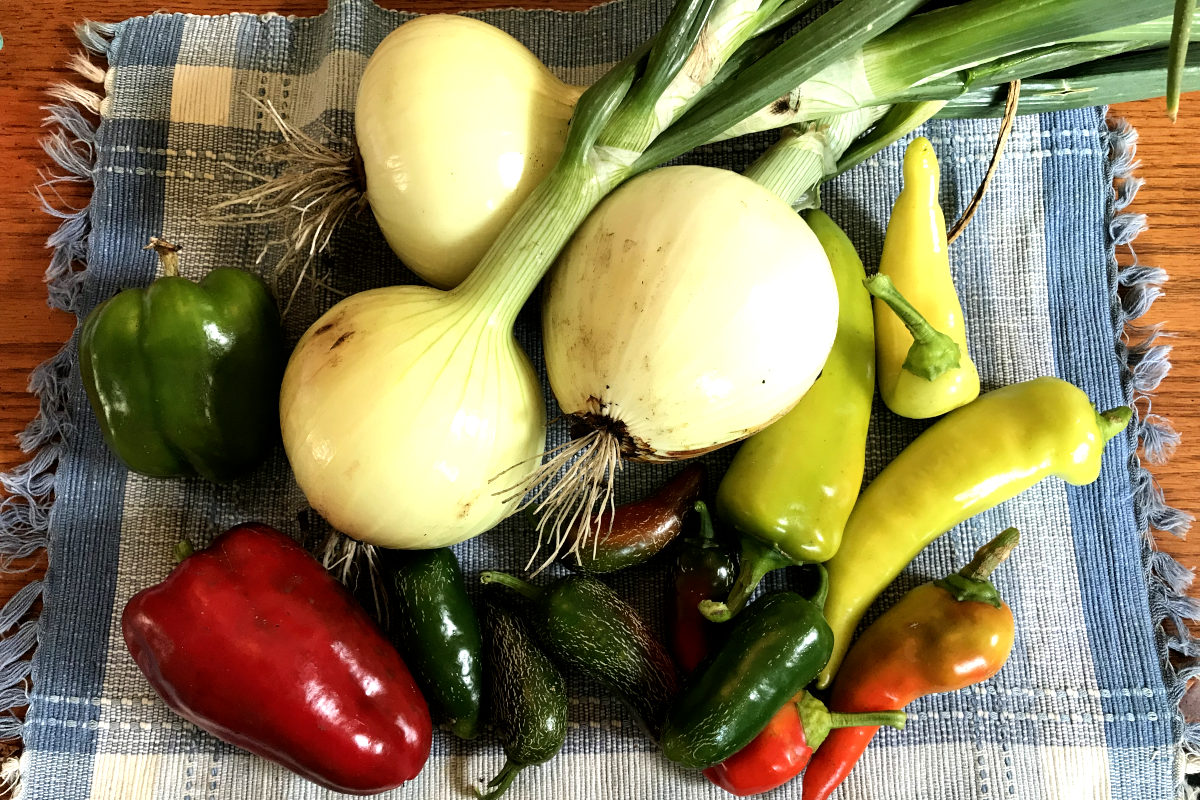
Next time I will take out the littlest centers of the onion slices to hasten the drying times, and because the centers got very hard. But overall, I was pleased with the result. These dried onion flakes are light and crunchy, reminiscent of sour cream and onion chips! It would not be hard to make a snack of them or add as a crunchy layer on a burger.
And the cycle begins again! It is very satisfying to be able to ensure a continuous supply of a simple staple, like onions. By producing this cycle in my own garden, the onions will continue to adapt to its micro-climate and be even more fruitful! You’ve got to try this one, and grow onions from and for seed!
You might also enjoy these gardening articles:
Carrots: Sowing, Storing, Saving Seed
 I'm Erika, I live on eighty acres in the northern prairies of southern Manitoba with my husband and four kids. Here, we enjoy the outdoors and try to be more self sufficient as we try new things in the garden and learn about our land and the world around us.
Leave a Reply