The Montreal Market Melon is a great find for gardeners, even far from Montreal here in the northern prairies. Its crispy green flesh has a wonderfully sweet, musky melon flavour in a generous size! Get the low down on where these treasures came from and how to grow them!
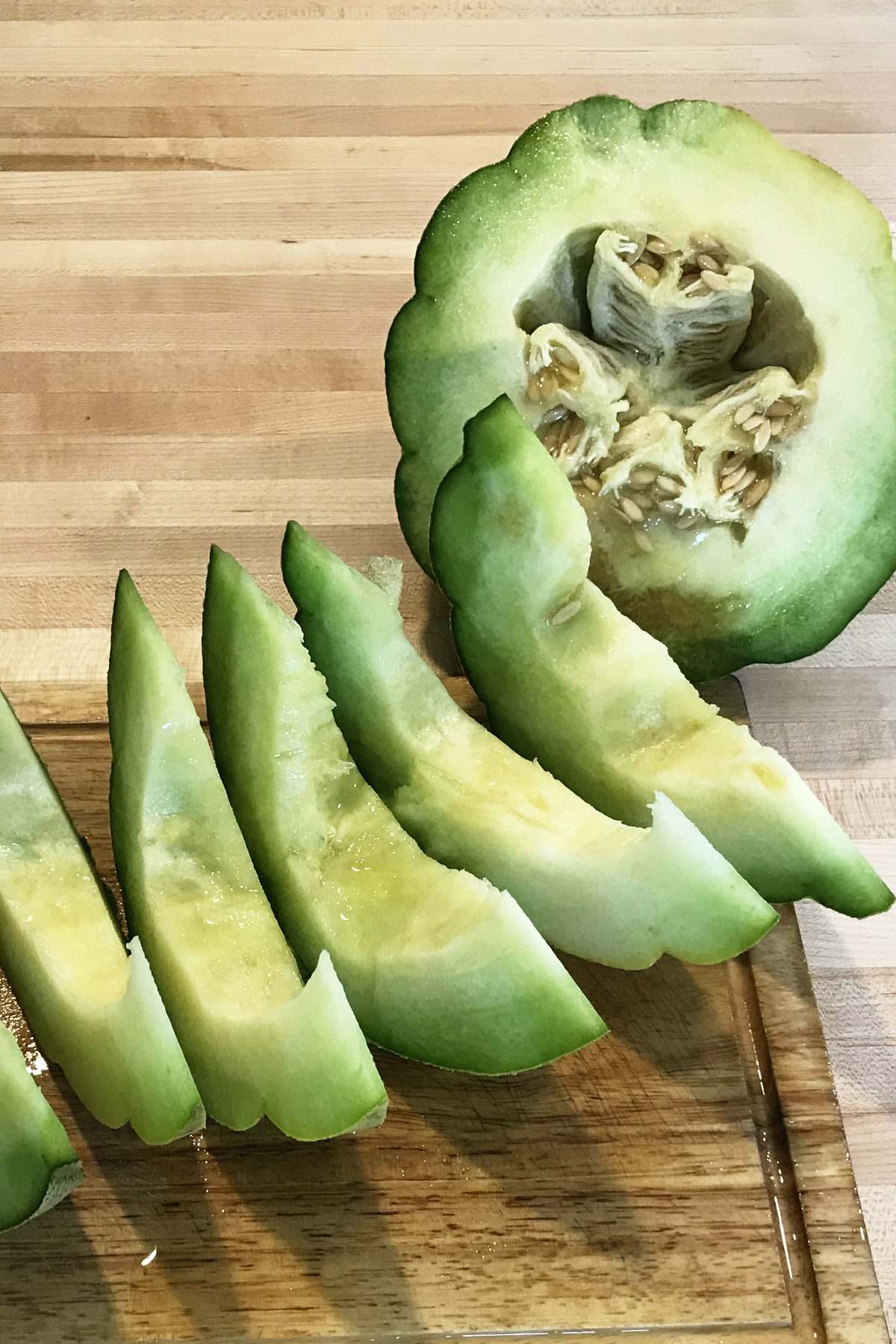
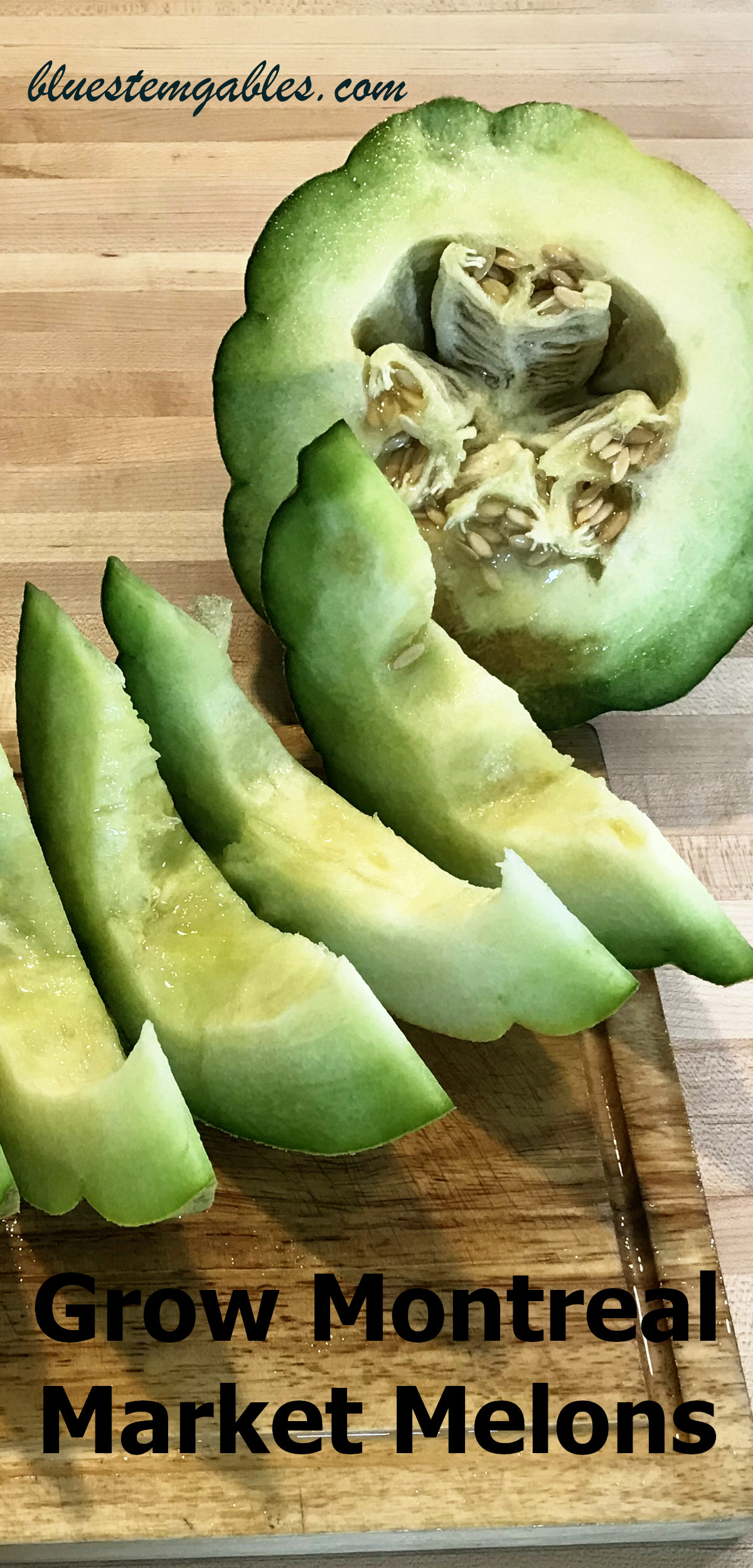
Some of my garden experiments flop (a single okra, anyone? The bugs sure liked my lemon basil, and the black sesame plants had a few pretty flowers (too cold for seeds this year)). But the Montreal Market Melon is a keeper!
Origins Montreal Market Melon
My goal this year was to plant more fruit. My family said, “No more turnips. No more rutabagas”. So this melon made its way into my online seed cart early in the year.
The Montreal Market Melon goes by several other names, including Montreal Melon, Montreal Muskmelon, or Montreal Nutmeg (not to be confused with the small nutmeg melon). It was developed through the 16-19th centuries by Montreal farmers – the early French settlers. By the 1870’s it was famous throughout Canada and New England, even selling for top dollar in high end New York restaurants.
Farmers grew Montreal Market Melon on the Island of Montreal, in the St. Lawrence River, which provided the ultimate micro-climate on fertile soil for these tasty wonders, growing perhaps up to ten pounds. Each family grew a slightly different strain, all exquisite.
Then in the 20th century the city of Montreal, on the same island, began to expand its boundaries, crowding out the farms. It is now one of Canada’s largest cities.
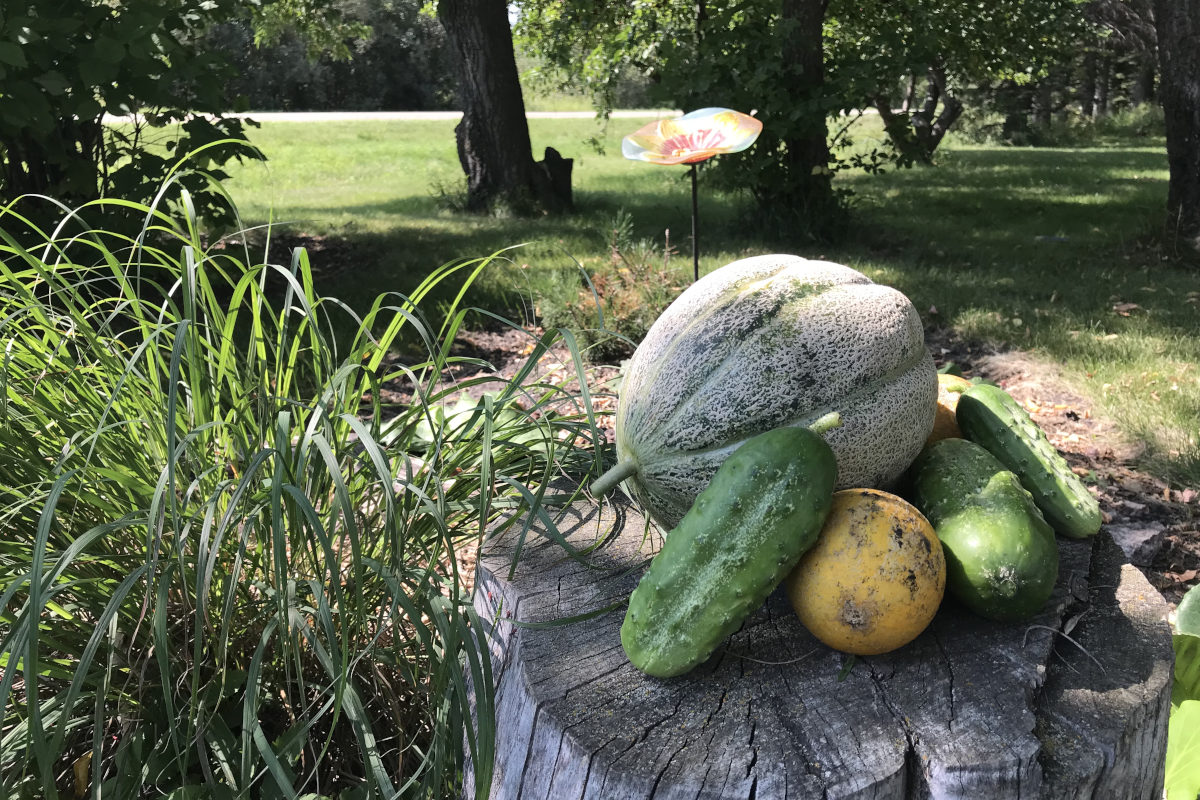
The Montreal Market Melon was thought to be extinct until a few seeds were found in the dark recesses of a USDA seed bank in 1995. By Jove, I wish my melon seeds lasted a hundred years!
Growing Montreal Market Melons
Montreal Market Melons grow like other melons. Start seeds indoors here in zone three, 3-4 weeks before the last frost. Give them a dose of fertilizer about two weeks after they sprout, when their first leaves start to look a little past prime. (They will eventually drop off. Coming directly from the seed, they are the first foods for the plants.) Transplant outside a week or two after the last frost.
Keep melons well watered in fertile soil. That said, my melons grow just fine in light, sandy soil, though I wonder if the flavour would be more intense in a more fertile soil…? They may benefit from some compost or fertilizer.
In order to get an optimum number of large melons, restrict the number of melons per plant, and trim off extra vines.
The maturity date for these beauties is surprisingly short for a larger melon, at 85 days. The trick is to pick them before the bugs get to them (They know when it’s prime!), when the melon starts to yellow on the underside.

Montreal Market Melons have a rough outer netting like a cantaloupe, ribbing like a pumpkin, and thick, sweet and musky, green flesh that can be eaten right down to the rind when it’s properly ripened.
My largest Montreal Melon grew to six pounds (2.7kg), though most, like my seed supplier, were 3-5 pounds each. My mother, to whom I gave two plants, had only two melons. Perhaps they got less sun??
Eating fresh melon is a late summer treat! Some people make melon pie (a la mode!) or use as an ice cream topping (no one said healthy and ice cream in the same sentence, did they?)
For long term storage melon can be chopped, laid out on a baking sheet, preferably on parchment to prevent sticking, frozen, and then stored in freezer bags. Then, look forward to a cool weather smoothie or pie. The husband always says, “more pie!”
Bonus
Praise the LORD from the earth, you mountains and all hills, fruit trees and all cedars, young men and maidens, old men and children. Let them praise the name of the LORD, for his name alone is exalted. Psalm 148 excerpts
So, keep an eye out for Montreal Market Melon seeds. They are available from many online seed suppliers. Try to order from a local supplier – the seeds may be more acclimated to your region. Let me know how you like these delicious treasures.
You might like these garden tidbits as well:
 I'm Erika, I live on eighty acres in the northern prairies of southern Manitoba with my husband and four kids. Here, we enjoy the outdoors and try to be more self sufficient as we try new things in the garden and learn about our land and the world around us.
Leave a Reply